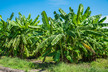
A blog post disputed a Time Magazine article stating that climate change "is coming" for bananas, claiming the warning was inaccurate. However, evidence shows that the effects of climate change on bananas are complex and vary by region.
A 2019 study found that rising temperatures have increased yields in several countries, particularly in Africa, although the gains were relatively small compared to those from technological advances. In contrast, yields have declined in countries such as Brazil and across parts of Southeast Asia. Under modest climate change scenarios, yield losses are also expected in India, Latin America, and the Caribbean, regions that produce and export most of the world's bananas.
In Africa, yield responses are inconsistent. Research in Uganda linked banana productivity to temperature and rainfall variability, showing that soil moisture deficits can cut optimal yields by up to 50%. Higher temperatures and more frequent natural disasters also heighten infection risks from fungal diseases such as banana wilt, while pests thrive under hotter conditions.
In Ecuador, higher temperatures have already raised production costs as growers increase fungicide use. Farmers elsewhere have reported similar challenges, saying that "climate change is affecting their banana farms, and killing their crops."
The UN Food and Agriculture Organization (FAO) has warned that banana producers face increasing risks from droughts, floods, hurricanes, and other extreme weather events, particularly in Latin America and Asia, which account for 95% of global banana trade. Pascal Liu, chairperson of the World Banana Forum, has described the "increasingly devastating effects of climate change" as one of the sector's main challenges.
A Nature study cited by Time projected that temperature rises and socio-economic pressures could cut suitable export banana areas in the Caribbean and Latin America by more than half, with yield declines in most producing regions. A 30-year study across Colombia, Costa Rica, the Dominican Republic, and Ecuador found that extreme weather caused "devastating impacts" on banana output, while short-term fluctuations in temperature and moisture led to yield losses that exceeded annual variations.
Similar findings from Australia warned that warming conditions may force producers to adjust varieties, timing, and locations, with some production zones becoming unviable. A review of 76 studies confirmed that multiple climate factors are already affecting banana production globally, including declines in post-harvest quality and sugar content at higher temperatures.
Given the body of scientific evidence, the claim that climate change poses no threat to banana production is misleading and missing context.
Source: Medium