A University of Idaho scientist has published management recommendations based on a decade of research to help Idaho potato farmers protect their crops against black dot, a fungal disease.
Phillip Wharton, an associate professor of plant pathology, compiled findings from studies conducted from 2011 to 2022 into a single paper, published online in Plant Health Progress on March 31.
Black dot is caused by Colletotrichum coccodes and is named for the black dots that form on tubers, roots, stems, and stolons. Symptoms appear late in the season after row closure. Stem lesions form near leaf petioles, starting as small brown spots that expand and develop white or straw-colored centres.
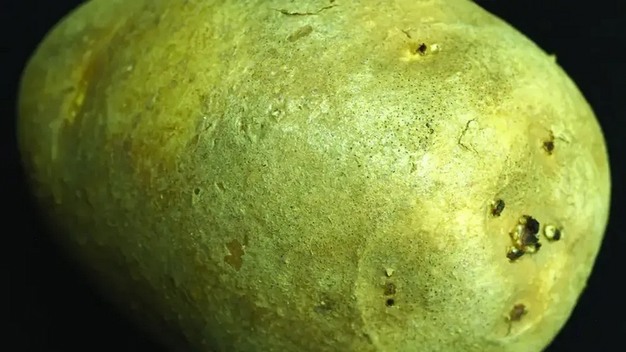 © University of Idaho
Wharton advises growers to shorten the growing season to reduce infections seen in storage without affecting yields. "For growers, the big takeaway is that black dot has to be managed in the field," he said. "By the time you see it in storage, the infection has already happened."
The research combines earlier work with fungicide trials conducted in 2021 and 2022. It covers soil testing, cultural practices, season length, storage management, and fungicide timing. Wharton noted possible drivers of increased disease pressure, including fungicide resistance, new varieties, and outdated practices.
Black dot reduces quality and increases processing waste. It can remain viable in soil for up to a decade and spreads through water splash from spores formed on plant debris.
"In the past couple of years, I noticed that I was being asked to present my work on black dot a lot more often, which suggests it's becoming more of an issue," Wharton said.
In 2011-12, Wharton adapted UK diagnostics for use in Idaho soil testing. He also tested how harvest timing affects disease levels, harvesting potatoes between 100 and 130 days after emergence. Yield differences were minimal, but disease incidence increased after 120 days. Potatoes harvested between 100 and 110 days showed 0-17% infection with 5-10% surface coverage, compared to about 55% infection and 10-20% coverage after 120 days.
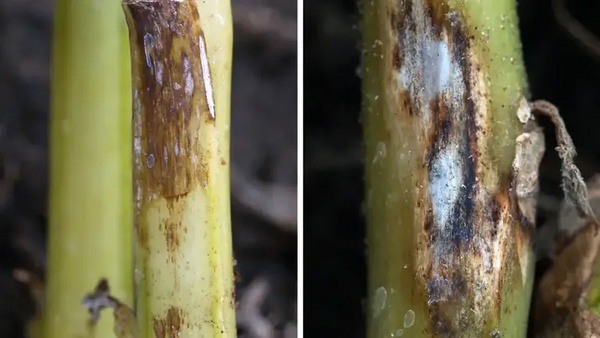 © University of Idaho
A 2012 soil survey in southern Idaho found nearly half of the samples positive for black dot.
Trials from 2012 to 2022 showed the disease does not spread in storage, with infections occurring before vine kill. Wharton recommends rapid cooling of storage and humidity control to slow symptom development.
Field trials from 2018 to 2022 showed early-season fungicide applications, from sprouting to 6 to 8 inches plant height, are more effective than later treatments. Results were consistent across registered products, indicating timing is more important than product choice.
Wharton found that plants are more resistant during early growth stages. After row closure, resistance declines, allowing infection to develop and spread to tubers.
He plans to publish an Extension bulletin later this year.
For more information:
University of Idaho
Tel: +1 208 885 6111
Email: [email protected]
www.uidaho.edu