Fruit growers in Poland are assessing losses after late April frosts damaged crops across multiple regions, with eastern areas most affected and stone fruit production under pressure.
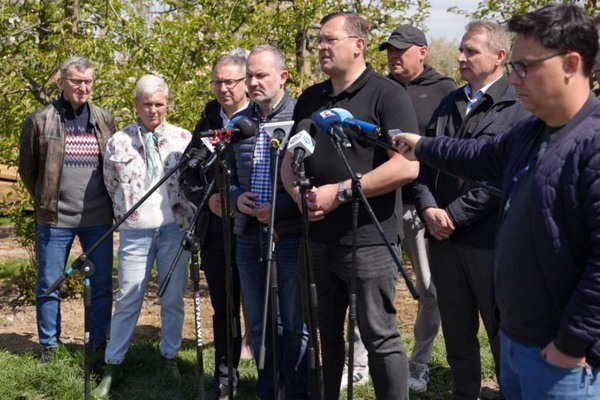
In the Lublin region, grower Marcin Gazda reported temperatures dropping to -10°C during several nights, impacting apple orchards. "What we've experienced over the last three nights is a tragedy," he told Polish state news agency PAP, as Agriculture Minister Stefan Krajewski visited his farm in Zakrzów to assess the situation.
Another grower, Jacek Maliszewski, shared images of frozen orchards, describing it as "another night of frost-fighting for the entire fruit-growing industry."
 © Poland’s Ministry of Agriculture and Rural Development
Frost damage has been reported across several regions, with eastern Poland recording the most impact. Growers implemented frost mitigation measures, including lighting bonfires to protect crops. Despite these efforts, Gazda estimates losses of 90% to 100% of his apple production, marking the third consecutive year of spring frost damage. "This is the third year of losses. It is a disaster for the fruit industry," he said.
During the field visit, Krajewski stated that damage assessments would be carried out and that affected growers would not be left "without support," noting that some farms have recorded losses of "100%." A formal assessment process is scheduled to begin on Monday.
The Ministry of Agriculture indicated that support measures will include funding from the national budget and European Union sources. Authorities plan to request financial assistance from an EU emergency reserve of €480 million (US$518.4 million). In parallel, the ministry is working on a crop insurance model aimed at improving stability and accessibility for producers, alongside support for tools designed to reduce the impact of natural events.
Krzysztof Hetman, who also visited the region, highlighted the role of agricultural workers during the May Day holiday. "Most Poles are resting today, but farmers and fruit growers have a unique profession. They work seven days a week. We are here today so that farmers know immediately after these events that they will not be left without help."
Source: TVP World