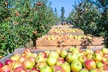
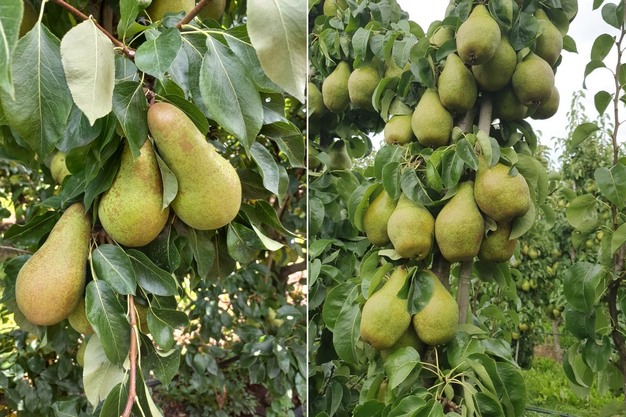
Satisfaction with the new harvest prevails at Van Lutterveld Fruit. The growing company, which specialises in top fruit and cherries, reports that both the quality and the volumes of apples and pears are strong. Perhaps there are even just too many. "Certainly, with apples, the volumes are high, but I expect that some of what is stored everywhere will never see the supermarket shelves. So maybe the actual usable stock is a bit smaller than the statistics suggest," says business manager Dirk-Jan van Lutterveld.
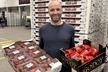
 © Dirk-Jan van Lutterveld
It was a hectic picking season, he explains. "It was a real challenge to get everything harvested on time, but that was the case everywhere. Fortunately, we managed to get it done just in time, thanks to the great efforts of all our employees, because both the apples and pears are of exceptionally good quality. The pears are also holding up well in storage. In the first weeks, you did see that everyone put their lower-quality, late-picked fruit on the market, but these are now largely gone. Now only good fruit remains. With apples, it is a different story."
Many apples will not make it to the supermarket
"Large stocks of apples and pears are now being released," Dirk-Jan continues. "Pears will continue to perform well because the quality is exceptionally good. For apples, stocks may be large, but part of that stock will never reach the shelves because they were picked too late. They are still counted now, but once those storage cells open, some of those apples will inevitably be downgraded. So in reality, the stock is not as big as it seems. Apples picked too late simply cannot compete seriously in the second half of the season. So there are some nerves, but I expect the price to recover after the New Year."
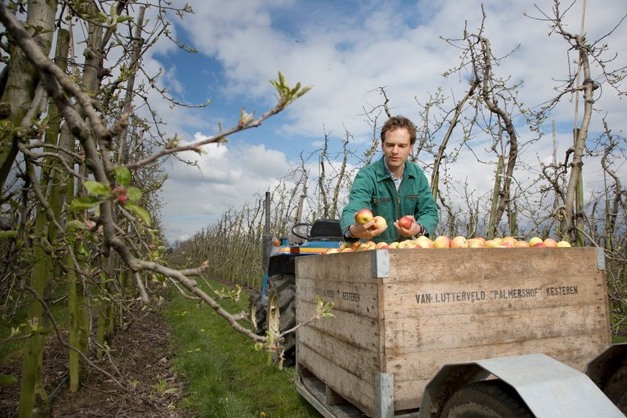
There is certainly no reason to complain about demand, he notes. "Consumption has actually been fine all season. The colder weather only stimulates that. What you hear about volumes moving through Dutch supermarkets is very positive. We are at a good pace. Of course, not everyone can deliver at the same moment: one grower feels that things are going well, while another wonders when his turn will come. But if the pace remains strong, everyone will naturally find their place. Only the very last, late-picked apples remain a question mark; that varies from grower to grower. Sometimes it is better to cull them in December, when there is still demand, rather than in January or February, when it is too late. Supermarkets can select very strictly because of the ample harvest. There is no shortage, so they choose the apples with the best quality. Ultimately, that is also better for the sector. Good quality on the shelf encourages repeat purchases, but it will undoubtedly lead to disappointment for some."
Xenia
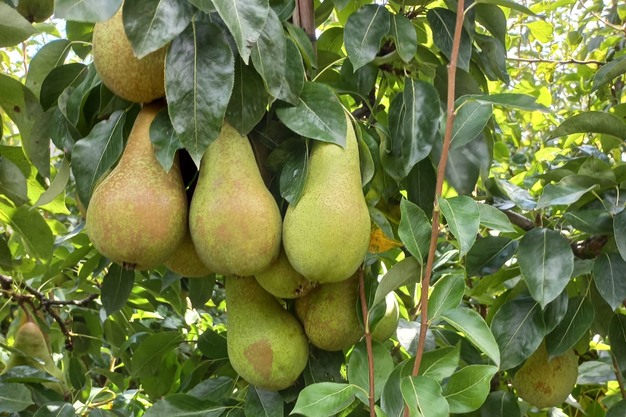
The Kesteren-based grower focuses mainly on Elstar and Jonagold apples, but also grows Conference. As to whether the company is considering new resistant varieties, Dirk-Jan is clear. "We are always looking around us. For example, we planted Xenia pears. Initially, these were seen as bulk pears, but I notice that many people actually really like Xenia; some even ask for it specifically. The pear was introduced as very productive, but that production is not always as high as expected. On average, it is good, but what stands out is that many people like the taste."
 © Dirk-Jan van Lutterveld
"Besides, I think other varieties like Sprank are also very good. It just doesn't suit us, because we also have cherries and therefore already have a long harvesting season. For farms with fewer crops, that variety can fit very well, but you cannot tie workers to you for six months. Still, I think it is definitely positive that new varieties are being introduced. It allows you to serve a broader range of tastes, and it expands the market for Dutch growers as a whole. At the same time, Elstar remains a favourite for many consumers. It is not the easiest apple to grow, but it is still the most loved apple in the Netherlands."
Not playing ourselves out of the game
Positivity aside, he also sees major challenges ahead. "When it comes to challenges in the sector, crop protection remains a major issue. The Netherlands is one of the best boys in the class, but we have to be careful not to become so strict that we play ourselves out of the game. If you ban everything, you undermine your own food production. We saw during corona how quickly shops can empty. If something happens in the world and we have reduced our own production, we will be even worse off. You cannot simply rebuild the agricultural sector once it disappears; it never returns in the way you would want. It is important to keep telling that story: The other side of the coin. Not just: 'everything is dangerous and bad'. Create awareness."
One challenge that Van Lutterveld Fruit now faces to a lesser extent is labour. "We have not had major problems, and I notice that staff are increasingly returning to us. What also helps us is the GOtrack system. This is an autonomous steering system that we support actively. It allows the tractor to drive through the field unmanned. The route and actions need to be demonstrated literally once. GOtrack can then repeat that exactly, over and over again. The same, or with different speed, rpm, spray output, etc., if required. It saves resources and labour costs, and it is now subsidised through POP3. It is certainly attractive as a cost-saving tool in the current climate, both for many growers and for us," concludes Dirk-Jan.
For more information:
Dirk-Jan van Lutterveld
Van Lutterveld Fruit
Boveneindsestraat 22
4041 EJ Kesteren
[email protected]
www.lutterveldfruit.nl