Water supply, soil moisture, and irrigation demand are emerging as early-season concerns in the U.S. potato sector, although the impact varies by region. As the 2026 season moves into planting and early crop development, drought conditions are present across several key production areas, while others report more stable moisture levels.
According to Drought.gov, 52.4% of the U.S. and Puerto Rico is classified in moderate drought or worse under the U.S. Drought Monitor. For potato growers, the issue extends beyond classification levels to include soil moisture reserves, irrigation availability, and crop development stages such as tuber initiation and bulking.
The main production belt shows uneven exposure. USDA data for the 2025 crop indicates total U.S. potato production reached 412.86 million cwt, led by Idaho with 138.38 million cwt and Washington with 87.19 million cwt, followed by Wisconsin, Oregon, North Dakota, Colorado, Michigan, Maine, and Minnesota. This places focus on drought developments in Idaho, Washington, Oregon, Colorado, Nebraska, and Maine.
Idaho remains the primary state to monitor, with 75.5% of its area in drought conditions, including 37.3% in severe drought and smaller shares in extreme and exceptional categories. Oregon reports 70.8% in drought, while Washington shows 42.6%, largely in moderate drought. Colorado and Nebraska report broader exposure, with 98.3% and 88.3% of their areas affected, respectively. Maine also reports 85.9% in drought.
Topsoil moisture data provides a more detailed field-level view. As of April 19, Colorado reported 92% of topsoil moisture as short or very short, while Nebraska reported 82%. By contrast, Idaho, Oregon, Washington, North Dakota, Wisconsin, and Michigan reported lower shares in short or very short categories. This reflects the role of irrigation in parts of the western production system.
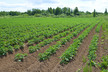
Dry spring conditions can support fieldwork and planting, but potatoes remain sensitive to water stress due to shallow root systems. Moisture levels during tuber initiation and bulking influence yield, tuber size, and quality parameters relevant for fresh, processing, and seed markets.
Florida and Texas show higher drought intensity, with 99.0% and 75.9% of their areas affected, respectively. While these states represent smaller shares of national production, they remain relevant for seasonal fresh supply. Higher irrigation demand and heat exposure may affect crop performance in these regions.
The Upper Midwest currently reports lower drought exposure. Wisconsin, Michigan, and North Dakota show minimal drought presence, while Minnesota reports limited exposure. These regions will continue to monitor rainfall as planting progresses.
Storage data adds context. USDA reports 127 million cwt of potatoes in storage as of April 1, 2026, down 1% year-on-year, with 31% of the 2025 crop still in storage. Season-to-date disappearance is down 2%, while processing use is up 3%.
At this stage, the drought situation has not altered overall supply expectations. However, continued dry conditions in key producing states may shift focus toward irrigation reliability, tuber sizing, and quality outcomes as the season develops.
Source: Potato News Today