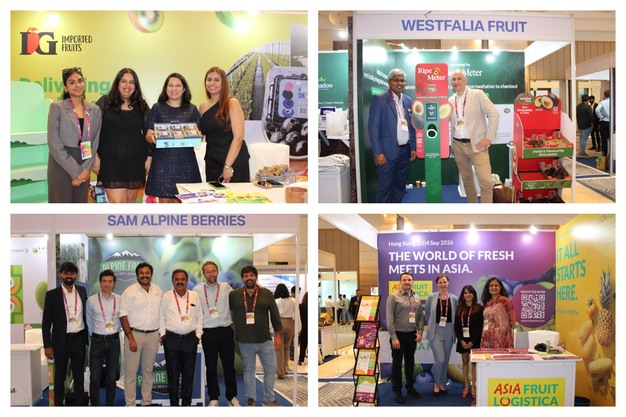
Fresh Produce India 2026 wrapped up at Mumbai's Trident Nariman Point Hotel last week, witnessing a day buzzing with panel discussions, networking, and deal-making. Avocados and blueberries dominated discussions as hundreds of growers, exporters, retailers, and marketers tackled India's horticulture and export challenges and opportunities. From consumers demanding real health results to new varieties rewriting production playbooks, sessions brought forward what the next phase of India's produce trade with the rest of the world looks like. Here's what stood out.
Click here for the photo report from the event
 © Alysha Fernandes | FreshPlaza.com
FPI awards celebrate market movers
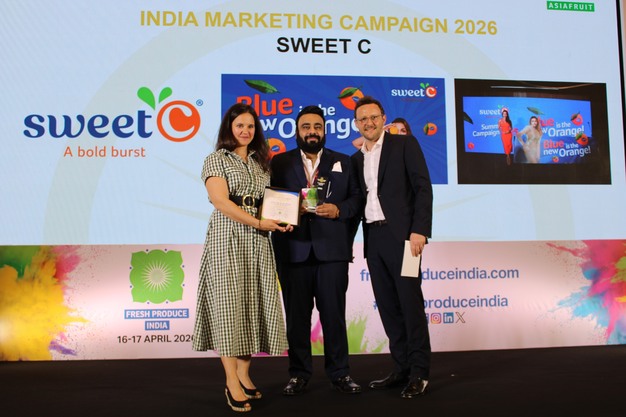
The Fresh Produce India Awards put a spotlight on category leaders breaking new ground. Westfalia Fruit India grabbed the India Business for their efforts to kickstart the avocado boom in the country. Their 2023 Mumbai ripening plant now runs four hubs across 16 cities, hooking up with quick commerce for a new category of ripe-to-eat packs through hyperlocal grocery deliveries. Sweet C's India Marketing Campaign win came from "Blue is the New Orange," a July 2025 push to bust an "all citrus is orange myth."
Namdhari's Group earned India Impact for transforming Indian horticulture from fragmented low-income plots into an organised, high-value global outfit. Simpli Namdhari's Narinder Singh accepted the award, saying: "The recognition reflects a four-decade commitment to putting people and the planet before profit, while pioneering GAP-certified, residue-free farming in India." They are India's only 100 per cent vegetarian omnichannel, seed-to-plate retailer and exporter of over 36,000 tonnes. Fruitnet Asia's Managing Director, John Hey, praised them for "setting new benchmarks."
 © Alysha Fernandes | FreshPlaza.com
Indian shoppers want proof, not promises
Indian buyers aren't fooled by the "healthy" hype anymore. Panelists on "India's changing consumer" stated that consumers demand select fruits proven to fix gut issues, offer fibre, or shed kilos. "Label-reading consumers now connect with nutritionists online in the advent of rising diabetes and obesity, favouring whole fruits over processed foods. FSSAI's Eat Right India is also promoting a simple campaign of "a fistful of nuts daily, 400g fruits ot veg, rainbow plates in homes, schools, and offices."
Westfalia's Ajay TG mentions that marketers must now "show, not tell" today's tech-savvy consumers. "Within quick commerce, ripe avocados make up 50-60% of sales. Tiered packs are converting customers to premium buyers in places like Chandigarh and Cochin, as trial sizes hook first-timers." Recipe clips also tie avocados to slimmer waists, and K-beauty glows.
 © Alysha Fernandes | FreshPlaza.com
South India keeps it steady
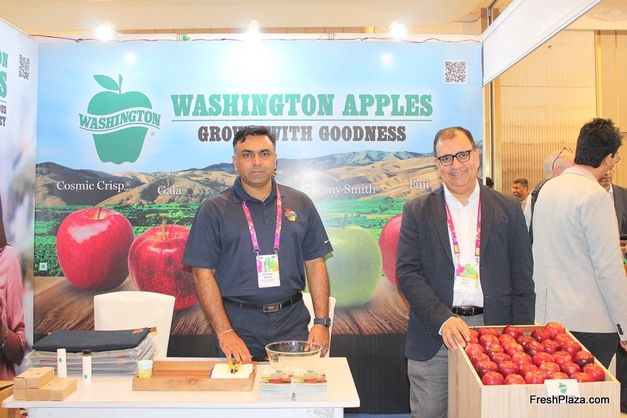
South India's warm climate ensures year-round staple demand for apples, kiwis, and citrus, with no northern winter fruit swings. Regional chains like Simpli Namdhari's and PJJ Fruits have learned to read hyper-local tastes well, covering IT expat hubs to traditional areas. "Premium mandarins now eclipse local oranges as convenience gets increasingly prioritized," says Gopi Shankar of Global Victoria.
Panelists discussed how quick commerce is powering impulse trials, but one bad peach could kill repeat business in a predominantly touch-and-feel category. As a result, physical stores still dominate when it comes to stone fruit sampling. "At 50% urbanization, cities like Coimbatore, Mysore, Mangalore, and Mosul serve as new growth markets, with retail chains looking to satisfy premium fitness shoppers alongside high-volume mass consumers."
 © Alysha Fernandes | FreshPlaza.com
Premium varieties require premium effort
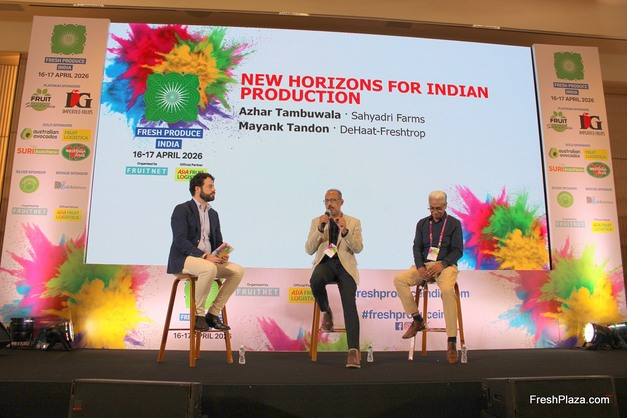
Growers talked about production next, and the consensus was clear: new varieties need proper groundwork. Sahyadri Farms' Azhar Tambuwala narrated how his team learned it the hard way when they rushed into big plantings. Today, their 20-acre laboratory tests 40 global grape varieties side-by-side with traditional Thompsons, letting farmers see the yield differences themselves before anyone commits commercially. "That hands-on proof turned skeptics into planters," he says.
DeHaat-Freshtrop's Mayank Tandon put it plainly: "No variety succeeds without serious agronomy." They bring in consultants from similar tropical climates to guide growers, setting expectations upfront that premium results require premium effort. "Grape growers, already GlobalGAP certified since 2003, now layer on weather stations, in-house soil and water testing, even crop stress monitoring with tools lifting quality across both new introductions and traditional staples. Smallholders see the math: better practices mean better prices."
The pattern repeats beyond grapes. Tango citrus, Sugar Belle oranges, protected pomegranates, and specialty broccoli are all gaining ground, but success hinges on breeders getting involved beyond licensing. "Making weekly farm rounds during early adoption reflects real commitment, not just contracts," the panelists suggested. "For India's 90% smallholders working 1-2 acre sustenance plots, demo farms and constant hand-holding remain non-negotiable, especially with climate increasingly presenting rain and disease challenges. Government processes are helping too, with quarantine periods doubling as trial blocks to cut import timelines from two years to six months."
 © Alysha Fernandes | FreshPlaza.com
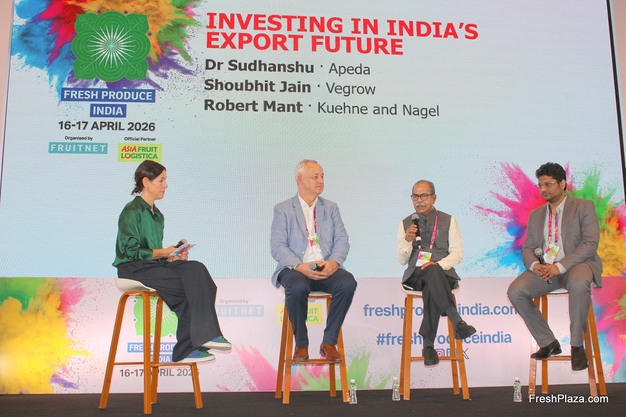
Investing in India's Export Future
A session on India's fresh produce exports brought it all together. APEDA's Dr. Sudhanshu highlighted how India's fruit trade has turned a leaf, with the last few years adding avocados and blueberries to the GI-tagged item mix. APEDA supports new market development through buyer-seller meets and trade fair participation, then hands off to state horticulture departments, where farmers invest in proven demand. "It's not about pushing volume; it's about matching what markets actually want," he explained.
Technology is also making fragmented supply chains easier to work with. "Banana exporters have scaled 5,000-6,000 containers yearly using AI imaging and geo-tagging. Video calls support smallholders in following pre-harvest protocols that ensure shelf life and uniformity to Ecuador standards. The need for experts on every farm is being fulfilled by cameras and tech now scales compliance where human oversight couldn't," panelist Shoubhit Jain of Vegrow mentioned.
"Logistics stays tricky with global reefer chaos, but sharing volume forecasts and not just acreage helps partners position containers early," Robert Mant of Kuenhe and Nagel suggests. Meanwhile, Indian bananas can hold 30-60 days under a cold chain, but panelists pointed out that the real hurdle is consistent ripening across thousands of small plots. "APEDA is also working on sea protocols with research institutes for long-distance markets."
Panelists also highlighted Free Trade Agreements with the EU, UK, NZ, and UAE as cracking new doors open, but turning this access into demand means branding products through organized chains. Progressive farmers measure output by tons, not acres, and this mindset is expected to drive India's fruit export success. The pieces of consumer pull, regional scale, variety innovation, and tech-enabled logistics are aligning, and the vibe at Fresh Produce India 2026 showed that India's horticulture sector is ready to deliver.
 For more information:
Laura Martín Núñez
Fruitnet
Tel: +44 (0) 20 7501 3720
Email: [email protected]
www.fruitnet.com