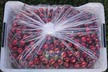
As the previous Turkish cherry season turned out to be a disaster, growers and exporters are happy with a much more promising outlook for the new upcoming season, says Yagmur Ozbutun, export area executive at Ser Pak Packaging, a Turkish packaging specialist: "Last season, the cherry harvest across many regions was significantly impacted by frost events, particularly during the flowering period. Sudden temperature drops directly limited fruit set, resulting in a weaker-than-expected harvest. This once again highlighted how critical climate conditions are for highly sensitive crops like cherries. As the new season begins, the outlook appears more promising. So far, no major frost events have disrupted production, pointing toward the potential for a stronger yield. However, in cherry production, risk never truly disappears; it simply shifts."
 © Serpak Ambalaj
Ozbutun emphasizes that cherries enter a rapid quality decline process straight from harvest. "In cherries, the most critical phase starts at harvest. From the moment the fruit is picked, it begins to lose its natural protection and enters a rapid quality decline process. Moisture loss, softening, and loss of brightness are not just physical changes; they directly impact market value. At this stage, the challenge is no longer just about producing high-quality fruit, but about preserving that quality across the supply chain."
Across Europe, harvest timing varies significantly depending on geography. Ozbutun states, "Southern regions tend to enter the market earlier, while Central and Northern regions follow later in the season. This staggered supply creates market opportunities—but also intensifies competition on quality. Because in today's market, differentiation is no longer achieved only in the orchard, but at the point of arrival."
 © Serpak Ambalaj
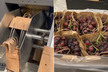
"From harvest to final destination, every step, pre-cooling, loading, transportation, storage, and distribution, has a direct impact on the product," Ozbutun continues. "Even minor disruptions in the cold chain can accelerate deterioration and lead to irreversible quality losses. The first hours after harvest are decisive in determining shelf life. Delays in pre-cooling, improper handling, or exposure to uncontrolled environments can significantly shorten the product's market window. In sensitive products like cherries, small delays can translate into days of lost shelf life."
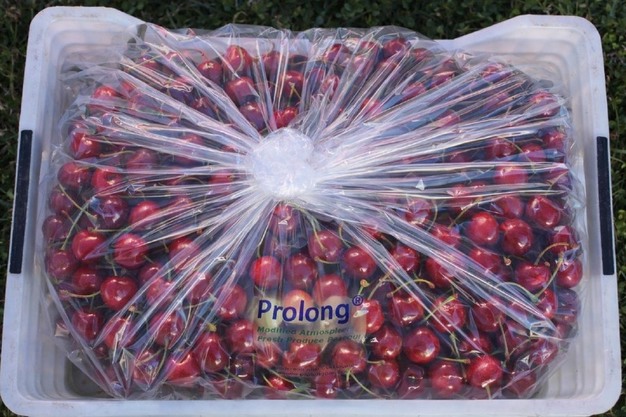
Within this fragile system, Modified Atmosphere Packaging (MAP) plays a central role in preserving cherry quality, Ozbutun explains. "MAP is not just a packaging format, it's a system that actively manages the product's post-harvest behavior. By regulating the balance of oxygen and carbon dioxide, it slows down respiration, reduces moisture loss, and stabilizes the internal environment. This enables cherries to retain firmness for longer, maintain visual appeal and brightness, and reduce dehydration and weight loss. Ultimately, it helps preserve not only freshness, but also commercial value throughout the supply chain."
 © Serpak Ambalaj
According to Ozbutun, the benefits of MAP are directly linked to how it is applied. "Rapid transition into controlled conditions, combined with appropriate packaging design and disciplined process management, is essential to unlock its full potential. This requires moving beyond a 'packaging-only' mindset toward a more integrated, system-based approach to post-harvest management. In this context, solutions such as Prolong are designed to support the stability of sensitive products like cherries by extending shelf life and slowing quality degradation. Rather than acting as a passive barrier, such systems aim to maintain the product's natural balance, especially during long-distance distribution."
"In cherries, the real difference is not defined solely by how well the fruit is grown, but by how long that quality can be preserved. Climate shapes the harvest, but post-harvest strategy defines the outcome," Ozbutun concludes.
For more information:
Yagmur Ozbutun
Ser Pak Packaging
Tel: +90 533 073 70 98
[email protected]
www.serpak.com.tr/en