Ginger supply is steady right now with product coming from a number of regions. "There was a bit of a shortage on good-quality Chinese ginger in January. What was left of their old stock had some decay issues and the new crop wasn't quite mature enough yet to ship," says Kian Fattahi of Global Farms Enterprises. "We're past those problems now and it's reflected in the market price. On the West Coast, prices have really come down. That had put pressure on ginger prices from everywhere else but a lot of that pressure is gone now."
Now, along with good quality ginger arriving from China, there is also good quality product from both Thailand and Mexico. "Thai product has looked good for the past few years now. What we're getting out of Mexico as well, the quality also looks quite good and the advantage is the much shorter transit times," says Fattahi.
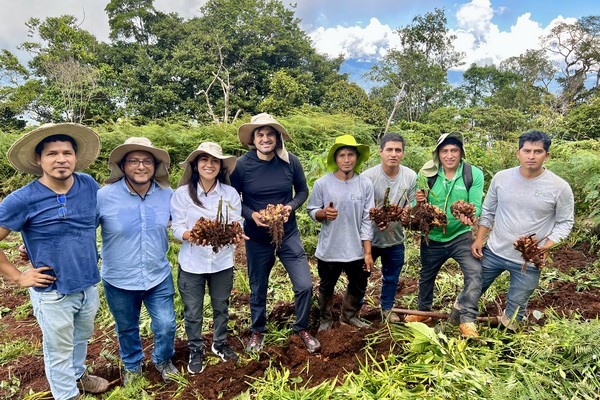
Peru is also sending steady shipments of ginger. That is a change from last year when Peru had a shorter supply which in turn, placed higher demand on other non-Chinese ginger. "This year is the opposite. There's plenty of Peruvian ginger. They had quite a bit of rain in January and February but there is a lot of ginger there so we expect to have Peruvian year round and we don't expect to have to use any air freight as long as the quality holds up," says Fattahi.
 © Global Farms Enterprises
The company's team in Peru.
State of demand
As for demand, while it's stronger in January and February following healthy eating New Year's resolutions, it does tend to adjust this month. It's also softened slightly due to the economic decisions consumers are making–namely, eating out at restaurants less or watching their grocery bills more.
So where is all of this leaving pricing? With the volume arriving collectively from all growing regions, and regions such as Brazil on the horizon ready to ship once their product is mature, it's stable. "We are looking at freight costs with what is going on in the Middle East," Fattahi says. "It's already trickling over and we're hearing that with in-land transit in Peru, costs are going up. Some of the shipping lines are already telling us about an issue with empty containers too."
 For more information:
Kian Fattahi
Global Farms Enterprises
Tel: +1 (323) 415-6000
[email protected]
www.global-farms.com