The Belgian organic top fruit season is running remarkably parallel to the conventional season, says Gunther De Vadder of BelOrta. "With pears, there are some quality differences, and volumes are higher than in other years, but the biggest challenge is undoubtedly with apples. If we are not careful, part of the good harvest will soon end up in the industry," says the cooperative's bio manager.
 © Jannick Flach | FreshPlaza.com
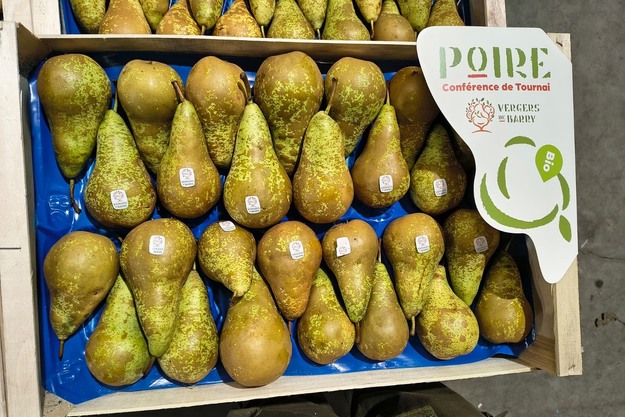
"The fluctuations in sales that characterise the conventional segment are also visible on our side," Gunther explains. "Organic trade is slightly more stable, but very similar overall. In pears, there has clearly been more market movement since January. This is mainly due to exports. Switzerland started early, France is now fully in the season, and Italy is cautiously following. In both volume and sales levels, we are roughly in line with other years, although everything started somewhat earlier."
Reality in organic apples
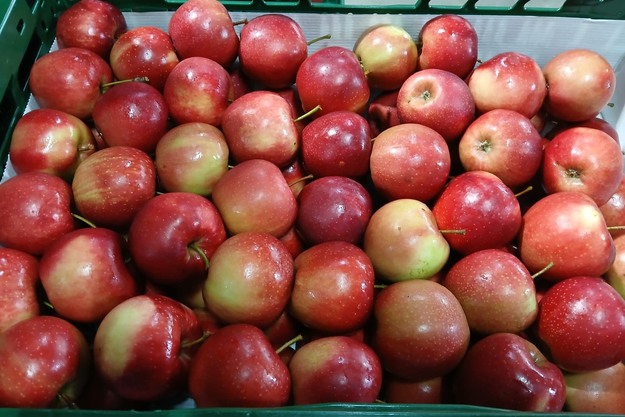
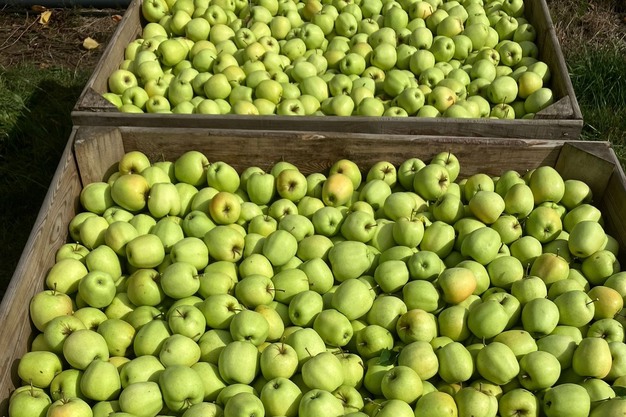
However, he says the biggest challenge this season lies with apples. "As with pears, we are seeing quality differences, sometimes even within the same plot. That makes things particularly difficult. We recently sorted a 50-tonne lot, of which only 25–30 tonnes met the requirements without any issues. The rest started to soften more quickly, even though everything was harvested at the same time and not too late. What caused this? That remains conjecture. Possibly heat played a role, but no firm conclusions can be drawn. What we do observe is that some lots are dropping below the required firmness more quickly than normal. At this time of year, supermarkets usually demand a minimum firmness of 5, while certain organic varieties are increasingly struggling to meet that. Some batches move quickly towards 4.8 or 4.9 and are then rejected without mercy. This leads to frustration, especially as the causes cannot be clearly demonstrated."
 © Jannick Flach | FreshPlaza.com
This makes it difficult from a sales perspective to get all organic apples into the right channels. "Unfortunately, there seems to be little understanding of this reality. Not every buyer, but some maintain an extremely strict ideal image. This is not just about quality in the classic sense, but mainly about size, weight, and uniformity. Sorting is sometimes done within a ten-gram weight range or based on size differences of just a few millimetres. In practice, that means sorting 100 tonnes to extract 14 tonnes of 'perfect' product. The remaining 86 tonnes are technically fine but fall outside that ideal image and have to be sold elsewhere."
Not exports, but industry
And while pears do find their way to export markets, apples hardly do. "With apples, almost everything is sold domestically. It cannot be otherwise, because everyone has large volumes. Germany, France, and Poland. As a result, much of the exported volume ends up in the industry, at much lower returns. That puts heavy pressure on growers, especially as they are already dealing with rising costs and uncertainty. It is not that customers are expected to accept soft or poor-quality apples, but margins are made so tight that a lot of good product ends up being wasted unnecessarily. In years of ample supply, selection becomes even stricter because there is enough volume anyway. But in that case, there should also be a fair price in return. That balance is often missing."
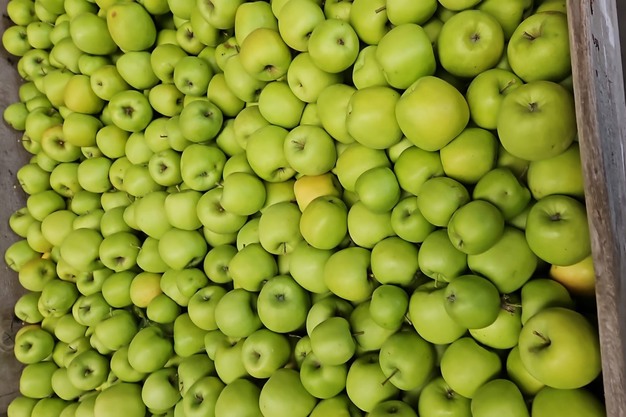
Looking ahead, the industrial market will therefore have to act as a safety net. "For apples, I expect a course similar to the reference year 2022, ending around mid-July with Natyra. Those apples are small-fruited this year, with size ranges between 65 and 78 millimetres. That could again clash with fixed specifications in supermarkets and health food shops, unless there is greater flexibility. Especially in organic, prices are fortunately reasonable at the moment, which helps limit the damage. However, it remains a stopgap solution. We deliberately direct batches that fall just below retail standards to the industry in good time, at moments when prices are favourable. The difference between industry prices and table fruit prices per kilo is simply too large to ignore, but it remains painful not to be able to sell good fruit as a consumer product."
 © Jannick Flach | FreshPlaza.com
Local priority in organic pears
In organic pears, the outlook is somewhat more positive. "Here, I expect a long season. Organic pears can probably be supplied until week 18, which is encouraging after last year's shortage. By then, there may be some overlap with overseas apple imports, but when it comes to imports, we see that timely and transparent communication does have an effect. If we inform customers early about how long we can deliver, some deliberately postpone their imports from Argentina and Chile, for example. Especially with good partners, you see a willingness to prioritise local product, provided continuity is clear. All in all, it has been a difficult and unsettled season, both conventional and organic. Only since early January has there been real movement in the market, and even now it is mainly about stabilisation rather than real breathing space."
"My belief remains that this is the moment to make organic, and in fact also conventional, fruit more accessible to consumers. Higher volume sales improve overall returns and benefit growers. The opportunities are there to drive greater consumption of healthy food. I say this both from the growers' perspective and from my experience in natural foods and retail."
 © BelOrta
For more information:
Gunther De Vadder
BelOrta
Mechelsesteenweg 120
B-2860 Sint-Katelijne-Waver, Belgium
Tel: +32 155 655 291
[email protected]
www.belorta.be