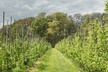
Banana growers in Kenya's Taveta region have seen major structural changes following the completion of the Danida Market Development Partnership (DMDP) program, implemented by the Micro-Enterprise Support Program Trust (MESPT) with Danish agency DANIDA and commercial partners Orana A/S and Wanda Agriculture Group. The five-year initiative, launched in 2020, targeted the rehabilitation of banana farming through improved inputs, market linkages, and certification.
For years, farmers faced limited markets, poor infrastructure, and low prices from middlemen, forcing many to abandon production. "We had bananas, but no one to buy them," said farmer Rose Dawa from Kitobo. "Even when we found buyers, they dictated the prices. We had no choice but to accept whatever they offered."
Under the program, farmers gained access to 476,035 tissue culture seedlings, supplied via JKUAT Enterprises, Maua Mazuri, and local nurseries. About 96.6% were Grand Nain, a high-yielding and disease-resistant variety. "MESPT connected me with the KEPHIS Horticultural Crops Directorate, which enabled me to produce certified seedlings," said nursery operator Emmanuel Lomwatu. "Now I can supply over 10,000 seedlings to farmers."
To make planting material affordable, a credit-based system allowed repayment after harvest. Over 2,100 farmers received training in Good Agricultural Practices and Climate-Smart Agriculture, with adoption rates increasing from 57% to 82%. Average yields rose by 27% from 46 to 58 tons per hectare, while post-harvest losses declined by 85% from 80 to 1.2 tons.
"This project has helped me sell my produce at better prices, support my children's education, and achieve financial stability," said Dawa. Monthly household income increased from about US$175 to US$235, and annual net income from banana sales rose from US$1,055 to US$1,710. Farmers intercropping with beans, maize, and vegetables earned an additional 45% in revenue.
The initiative led to the creation of Africa's first organic banana cooperative. "Rebecca suggested splitting the project into an organic part and a conventional part," said Orana A/S Director Niels Osterberg. "We wanted the organic side because global demand is higher for organic produce." The Taveta organic cluster, certified for export, has shipped over 28,000 tons of organic bananas under a premium export deal valid until 2034.
The Taita Taveta Banana Cooperative (TATABA) increased weekly aggregation volumes from 20 to 48 tons. About 2,200 farmers were linked to commercial buyers, facilitating 29,488 tons of sales. The project created 398 jobs, with 39% filled by women and 36% by youth.
Environmental practices expanded through agroforestry and composting, with 242,000 trees planted and 83% of farmers now mulching. Private investment of over US$3.9 million supported waste conversion technologies, fibre extraction, and composting.
Taita Taveta Governor Andrew Mwadime said, "Youths finish school but don't get employment, but through agriculture they can earn a living."
Source: Kilimo News