"The fruit processing industry in Germany is suffering considerably from a shortage of all types of fruit used in industrial processing. The shortage also affects varieties that are well supplied to the fresh market in Germany, such as cherries. The organic market has almost completely collapsed," reports Christoph Freitag of the Federal Association of the Fruit, Vegetable, and Potato Processing Industry (BOGK e.V.).
Frost and heat, heavy rain and drought: as a result of climate change, the weather is more changeable than ever before – with direct consequences for the food supply. For the second year in a row, the fruit harvest across Europe has been completely destroyed or is at least significantly lower than usual. This has been pointed out by the Federal Association of the Fruit, Vegetable, and Potato Processing Industry. According to the association, rain, hail, and frost have halved the plum harvest across the EU. The cherry harvest in Poland has been severely reduced, and in southeastern Europe, losses of 30–40 percent are expected. The market continues to be severely affected by the 70–80 percent decline in harvests in Turkey and Serbia. 40 to 80 percent of the apricot harvest and half of the peach harvest have been lost in Greece due to drought and heat. The apple harvest in Hungary is expected to be 25–30 percent below normal, as is the case in France.
At first glance, Germany itself does not appear to be impacted, as there is sufficient domestic fruit on the fresh market. However, German manufacturers of jams and fruit preserves are largely dependent on orchards in the European partner countries mentioned above, which specialize in supplying the industry. "Climate change is leading to structural change here," comments BOGK Managing Director Christoph Freitag. This is because the number of producers and their total cultivated area have been declining for years. In addition to the risk of weather fluctuations, they are struggling with rising energy and labor costs; in some cases, they can no longer find harvest workers. Added to this are new plant diseases, which are spreading more and more due to mild winters and currently pose a massive threat to the cultivation of stone fruit (mainly peaches).
In organic farming, plant diseases cannot be contained at all this year across Europe. Even more than in conventional farming, there is a lack of approved plant protection products. The organic harvest of fruit – and also vegetables – is extremely low this year, according to the grim conclusion of the BOGK.
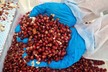
As a result, prices for raw materials are higher than ever, with enormous price increases compared to last year, which was already very lean. After several bad years, stocks are depleted; even normal harvests in the coming years – which also seem unlikely – will not be able to reverse the trend. "Consumers will find themselves facing empty shelves in some cases," predicts Freitag, "this year and next, especially for products made from cherries and blackcurrants."
This situation is devastating for processors. What has not grown cannot be processed. What is not sold does not generate revenue. However, companies are at a crossroads: on the one hand, they have to absorb rising energy and labor costs, and on the other hand, they want to invest in sustainability and innovation. The BOGK is therefore appealing to politicians to implement immediate reductions in energy costs, not to push through wage increases for political reasons, and to provide lasting relief for companies by significantly reducing bureaucracy.
Source: BOGK