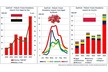
Southwest China's Yunnan province, known for its diverse landscapes, is emerging as a leader in specialty agriculture. This transformation has economically revitalized rural regions, particularly Zhaotong, which has become a hub for apple production due to favorable growing conditions. The province includes 88 counties previously affected by poverty and now cultivates a variety of crops. Zhaotong, once home to China's largest impoverished population, now leads in apple production, with 66,700 hectares under cultivation and an annual yield of 1.3 million metric tons.
The apple industry involves 138,000 households and benefits more than 500,000 people. Modern agricultural practices, such as the use of dwarf rootstocks and integrated drip irrigation, have improved efficiency and conservation. Yang Longjiang from Zhaoyang District's Industry Development Center highlighted these innovations as essential to achieving world-class results. A key orchard in Zhaoyang spans 6,670 hectares and features 118 apple varieties.
Household incomes have increased by approximately US$660, driven by this agricultural shift. Orchard tourism and apple-picking festivals have also contributed to local economic growth. Branding has played a key role in the industry's success, with the "Zhaoyang Red" label gaining multiple certifications that support exports to markets such as the UAE and Thailand.
Retailers like Sam's Club and Freshippo now carry Zhaotong apples, priced between US$1.10 US$1.93 per kilogram. The development of this industry has promoted regional growth through cultivation, processing, and commercialization, showcasing the powerful synergy between advanced agricultural technology and rural development.
Source: China Daily