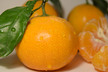
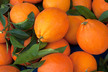
The oranges of the Navelate and Lanelate varieties are of great interest to the market because of their organoleptic properties and other interesting characteristics. However, incorrect storage can easily damage the fruit if people don't know how to treat it properly.
Storing oranges is complicated, especially in these varieties. The temperature is one of the main factors in the storage process. Too much or too little cold can damage the skin and the internal quality of the fruit completely, so it is essential to keep them in well-controlled chambers. Each of the varieties has an optimal storage temperature, as well as a recommended storage time. After that time, the fruit begins to lose its quality (loss of juice, bad flavors, skin pitting...).
Navelate and Lanelate post-harvest orange preservation products
The fruits have mechanisms of action against the cold, the structures of their cell membranes are altered giving way to an evolution in the lipids from a flexible to a rigid state and there is also a redistribution of the proteins. This leads to the appearance of stains on the fruit's skin, which devalues the price of the fruit. Storing the fruits in low temperatures for a period of time without adequate protection will end up affecting their organoleptic quality.
Waxes, one of the main protective agents used to store fruits, help reduce dehydration, the incidence of excessive cold, and the formation of a physical barrier against the physiological disorder caused by cold damage.
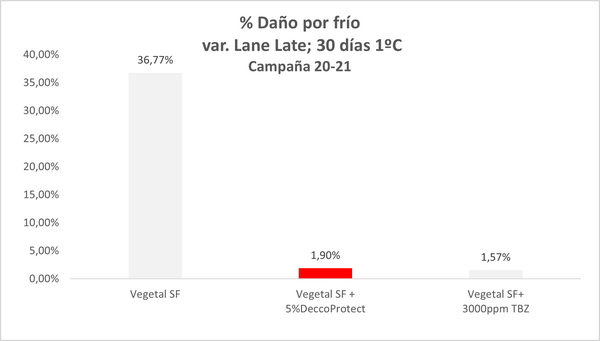
Deccoprotect is a supplement formulated with fatty acids that keep the skin of citrus fruits fresher for longer. In addition, it reduces symptoms due to cold damage, delaying the aging of the fruit, while providing shine and a good appearance.
Citrashine Long Life is a superior coating, ideal for medium-long-lasting preservations. It achieves truly relevant protection against cold damage, has outstanding film breakage resistance by condensation, good control of weight loss, and provides excellent and long-lasting shine.
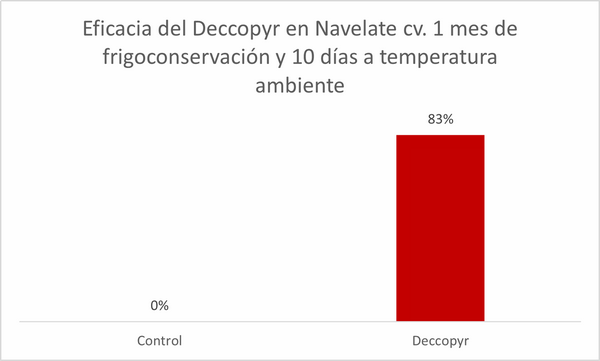
In addition, producers can use antifungal treatments for citrus to help protect the stored Lanelate and Navelate varieties from the attack of pathogenic fungi. The solution proposed by Decco is Deccopyr SC, a product that has many advantages over other fungicides for citrus fruits, including the following:
It has high efficacy against Penicillium spp., especially against the P. Italicum variety.
It is very effective against strains resistant to imazalil and thiabendazole, among others.
It has good behavior and protects stored citrus fruits well.
It is compatible and has positive synergy with DECCO boosters.
For more information:
DECCO
Tel.: +34 961 344 011
[email protected]
www.deccoiberica.es