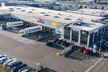
In Loudéac (Côtes-d’Armor), the frozen food factory Gelagri is celebrating its 40th anniversary this year.
The company was created in the late 1960s near Landerneau. In the beginning, it was just a small production unit for strawberries and artichokes. The factory opened in 1979. “At that time, the frozen food market did not really exist. The technology was lacking to produce it and store it in the homes. But once it started to develop, the issue of the factory location was raised. The goal was to have the shortest distance possible between the fields and the freezers,” explains Régis Pennarun, marketing director, in office since 1992.
Each year, nearly 70,000 tons of frozen products, mainly vegetables, leave the factory. This branch of the Triskalia cooperative counts 60 employees, including 470 in Loudéac. 600 farmers supply the Loudéac site with fresh vegetables. Before ending up on our tables, the spinach, beans, cabbages, peas, flageolets and root vegetables are sent to automated production lines. Olivier Morel, general director, confirmed the company’s good health. “We made a 2.5% growth in 2018.”
This good health is partly due to the company’s agro-ecological transition. The farmers are gradually replacing the conventional production methods by an agro-ecological approach. “We have been working for a long time to limit inputs. It is our strength today,” claims Georges Galardon, president of Triskalia. “We produce 85,000 t of vegetables per year and we package 100,000 t,” explains Olivier Morel. 5,000 t are certified organic.
“The clients can get their supply all year round. The company has more than 1,000 different products.” The storage capacity for frozen foods is 12,572,021 cubic feet: 54,000 “bulk” crates and 22,000 pallets.
The energy consumption of this industrial site is its weakness. It is the equivalent of the energy consumption of 11,000 households and the EFA freezing tool alone consumes as much water as the entire town of Loudéac.
Numerous investments
To remain at the forefront, Gelagri invests a lot: 8 million euros [9 million USD] per year (for France) between 2016 and 2018, 15 to 20 million euros [16.7 to 22.3 million USD] per year until 2021 (France and Spain). The company invests in terms of research and development (a new product is elaborated each week on average), or in equipment so that the production tools can adapt, almost in real time, to the harvest seasons of the different vegetables and to the tastes of the consumers.
60% of the production goes to the French market, but Gelagri also exports to Spain, Germany, and more and more to the United States, where french beans (green beans) are very popular. Tastes, in terms of frozen products, evolve quickly, much like the environmental considerations of the consumers.
Sources: actu.fr and letelegramme.fr