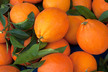
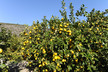
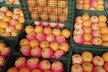
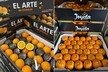
The minneola is a cross between a grapefruit and a mandarin. This citrus fruit is especially well-known for its juiciness and easy peeling. Yet, the minneola is known mainly in the Netherlands. Most of the cultivation in production countries is also aimed at this country. But is this fruit still as popular among Dutch consumers? We posed this question and a few more to Dutch importer and Israeli exporter. Today the Israeli exporter (part 2 of 2)
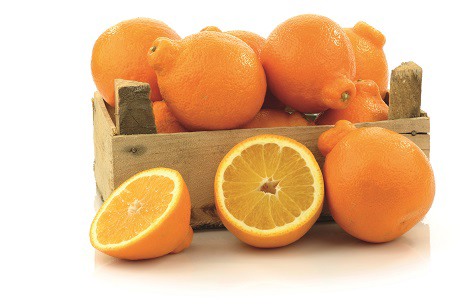
Israel is one of the countries where growers cultivate minneolas for the export market. “It has become a real niche product for us,” says Oron Ziv of the Israeli import-export company, BeFresh. “The citrus season is very short in Israel too. Harvesting is done in December and January, while sales last until February. Our season ends after that, and the United States takes over. Per season, we have roughly 4,000 to 4,500 tons of minneolas."
"The Netherlands is our most important export destination, with more than 60% of our total volumes going there. Then smaller volumes are exported to Belgium, France, Germany, and the United Kingdom. Not only are minneolas a nice product, so are their markets. If these markets were to fall away, we would quickly have to find an alternative for our products.”
Although volumes are stable, Oron has noticed a shift in the market. “Firstly, in the cultivation in Israel. We see that farming is becoming increasingly concentrated in the country’s northern valleys, while in the coastal areas, minneola acreage in on the decline. That is happening because there is high humidity in the coastal areas, which could mean the presence of Alternaria."
"This is a fungal disease to which minneolas are especially susceptible. Fighting this scourge causes production costs to soar, which are already sky-high in Israel. Combined with the often disappointing yields and profitability, many growers have decided to swop out their minneolas for other citrus varieties or even avocados. In the northern valley areas, these issues play less of a role."
"It is far less humid in those regions and, so, Alternaria is not able to gain as much of a foothold. The minneolas grown there are also of better quality and have a higher yield per hectare, which brings in enough money for the farmer,” explains Oron.
Secondly, Ziv has noticed more competition from Egypt and Turkey on the market. “Dutch retailers are buying more and more minneolas from those countries. The fruit from there is, after all, less expensive. However, since conditions in both those countries are not ideal for cultivating this citrus variety, they have to deal with more internal quality issues. Both these countries are emerging competitors for Israel. Not only in citrus, but for other fruit and vegetables too."
"This competition is mainly because Israeli products are becoming increasingly expensive. That, in turn, is due to the value of the Israeli Shekel rising at the beginning of 2020. This increased value undermines Israel’s competitive edge. That makes our export position less attractive to Russia when compared with Turkey. We send a limited volume of minneolas to Russia.”
Oron, however, sees that the minneola market is currently stable. “I am more concerned with the market in Asia. This market was recently opened to Israeli citrus, but the coronavirus has thrown a spanner in the works,” concludes Oron.
Oron Ziv BeFresh Europe
Tel: +972 4 6191736
Email: [email protected]
www.befreshcorp.net