Brazil is getting ready for a ginger campaign with higher supply, although the situation in the international market is still marked by competition from China, logistical uncertainty, and geopolitical tensions affecting transport costs.
According to Patrick Santana, sales director of Santana Ginger, everything points to a good harvest in 2026. "When plantings were carried out in 2025, prospects for production in Brazil were already good compared to last year," he says. However, he clarifies that this won't be confirmed until the main harvest starts in June and July.
 © SANTANAS COMERCIO E EXPORTACAO DE ALIMENTOS LTDA
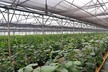
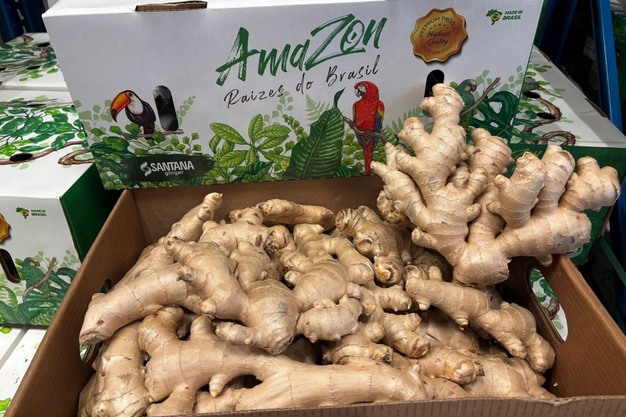
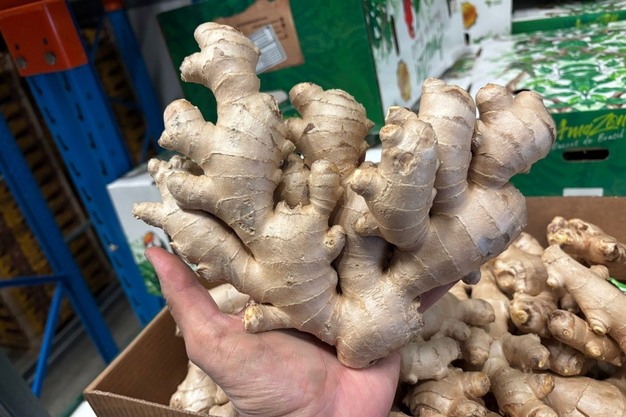
Brazilian ginger is mainly produced in the state of Espírito Santo, which accounts for practically 100% of the country's commercial production. The region's agro-climatic conditions, with plantations located between 600 and 800 meters above sea level, allow the growth of large roots, a distinctive feature of the Brazilian production. "The combination of soil, altitude, and climate results in Brazilian ginger being giant-sized," says Santana.
Europe remains the company's main export destination. "Between 85% and 90% of our sales go to the European market," he says. In contrast, the United States is less important for the Brazilian supply, while most of Peru's shipments go there.
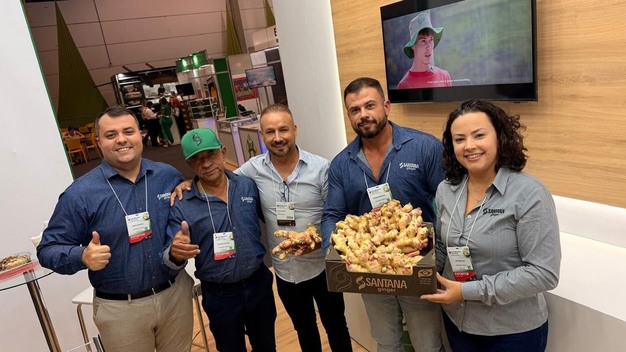 © SANTANAS COMERCIO E EXPORTACAO DE ALIMENTOS LTDA
China still has great influence on the global ginger market, especially in the months when Brazil has no supply. "This is the best time for China in Europe, as there is currently no ginger from Brazil," says Santana. However, the Chinese have also recently faced some quality problems and delays in shipments, which have occasionally caused some shortages in the European market.
This situation led to prices rapidly increasing at the end of last season. "Ginger prices went from 16 or 17 euros per box to 25 or 28 euros in the week or two when there was a gap in the market," says the entrepreneur. Today, prices have stabilized, with new Chinese ginger on the European market at around 30 euros per box, according to trade lists received by exporters.
 © SANTANAS COMERCIO E EXPORTACAO DE ALIMENTOS LTDA
However, logistical costs are still a determining factor. Air freight, occasionally used for urgent shipments, has become significantly more expensive. "Air freight can represent up to 50% of the value of the goods, and that makes it very difficult to be competitive," says Santana.
In 2025, trade tensions and products being redirected to Europe also caused market volatility and put downward pressure on prices for much of the year. "There were times when we were just breaking even or even selling below cost," he says.
For the coming season, the sector remains cautious. "We have enough ginger to sell; what we don't know is how the market is going to behave," says Santana.
In this context, the balance between volume and prices of Brazilian ginger in 2026 will heavily depend on the evolution of international logistics, Chinese supply, and the stability of global trade.
 For more information:
Patrick Santana
Santana Ginger
Brazil
Tel.: +55 27 99656 1133
[email protected]
www.santanasginger.com