Prospects for the next Peruvian ginger season point to an increase in volume and a more competitive international market. According to sector estimates, the country's production could grow by around 20% compared to last year, in a context in which other large producers also expect a greater supply.
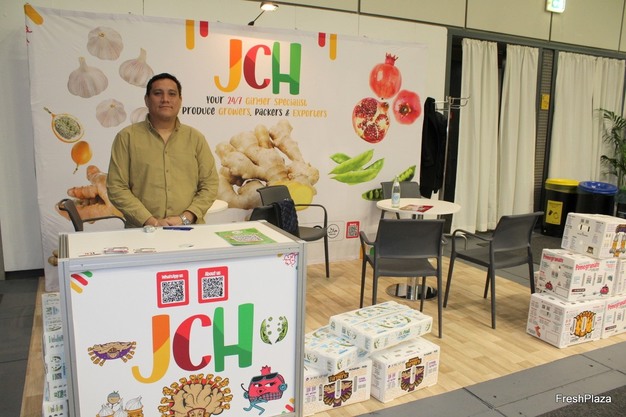 © Diana Sajami | FreshPlaza.com
According to Jorge Chang, general manager of JCH Agroexportaciones, Peru isn't the only one with a production increase. "We'll have approximately 20% more production than last year," he says. "And Brazil and China have also seen increases in their productions."
Tighter market conditions are to be expected in this context. The greater global supply could translate into pressure on prices, especially if several supplying countries coincide in the same destination markets.
The United States is still the biggest market for Peruvian ginger. "80% percent of what we sell goes to the United States and Canada, and the other 20% to Europe," says Chang.
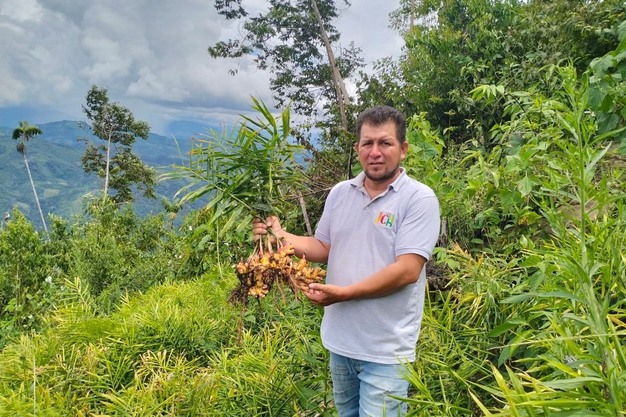 © JCH Agroexportaciones
However, the flow of exports in the next season could be affected by logistical and commercial factors. "The increase in freight rates to Europe and the uncertainty caused by the current geopolitical context could encourage more exporters to prioritize the U.S. market. There is some fear of the market becoming saturated faster than usual and prices being affected," says Chang.
The current season is almost over. At this stage, the presence of Chinese ginger on the international market has had an impact on price developments. "China is a volume-oriented supplier and has caused prices to fall quite a lot," says the executive.
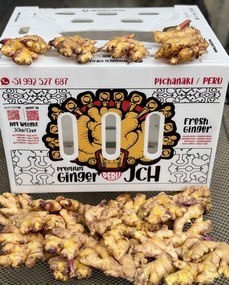 © JCH Agroexportaciones The new Peruvian season is expected to start in late April with air shipments, mainly to the United States, while sea shipments should start towards the end of May. However, Chang believes that the volume shipped by air could be limited. "Air shipments are usually made when there is no supply, but this year there's going to be plenty in the market, especially from China," he says.
As far as quality is concerned, prospects are similar to those of the previous season. Some rains were recorded during the agricultural cycle, but they occurred at favorable times for the crop's development. "We haven't had much of a problem in terms of quality, and things should be quite similar this year," says Chang.
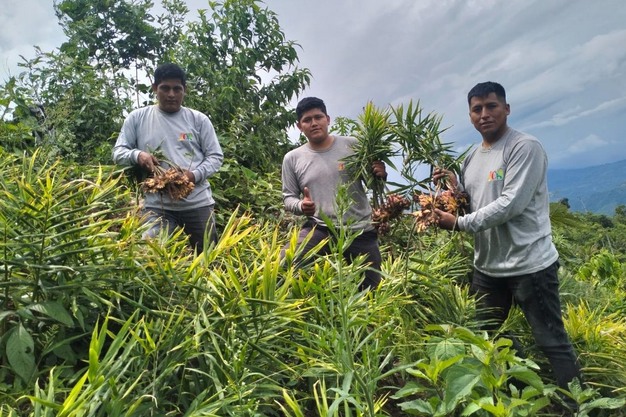
One of the most recurring challenges is the limitation to export larger volumes to Europe due to the presence of the Ralstonia bacterium, which makes it necessary to perform strict controls in the field and before the product's shipment.
 © JCH Agroexportaciones
In terms of volume, JCH expects similar levels to last year's. "Last year, we did around 200 containers. Hopefully, this year will be similar," says Chang.
The increased global supply could also influence buyers' demands. "With greater volumes, customers are going to require larger sizes than usual," he says. In a more competitive market, "requirements become more restrictive."
For more information:
Jorge Chang
JCH Agroexportaciones
Peru
Tel.: +51 989 603 286
[email protected]