A prolonged winter weather system across the southeastern United States is raising concerns for Florida's specialty crop sector. State officials have requested federal disaster assistance, while market participants report potential supply disruptions across several fruit and vegetable categories.
Florida Commissioner of Agriculture Wilton Simpson has requested a disaster declaration from the USDA following forecasts of sub-freezing temperatures reaching southern production regions, including Collier and Broward counties. The cold event has been accompanied by sustained winds of 20 to 30 mph, with higher gusts.
The freeze threat affects a range of winter commodities, including avocados, bell peppers, broccoli, celery, sweet corn, cucumbers, radishes, cabbage, citrus, eggplant, green beans, potatoes, strawberries, squash, and tomatoes. Florida supplies fresh vegetables during the winter months when production in other U.S. regions is limited, increasing the potential supply chain impact of weather-related losses.
In his request to the USDA, Simpson stated that growers had implemented protective measures but that the duration and severity of the cold could still result in production losses. Market participants expect that, if confirmed, damage assessments could lead to federal support programs through the Farm Service Agency and other USDA channels.
Meteorologists warn that frost conditions may persist, with additional nights forecast in the 30s across large parts of the state. Extended cold exposure is generally viewed as more damaging than brief freezes, particularly for fruiting vegetables and crops in active production cycles.
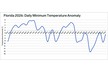
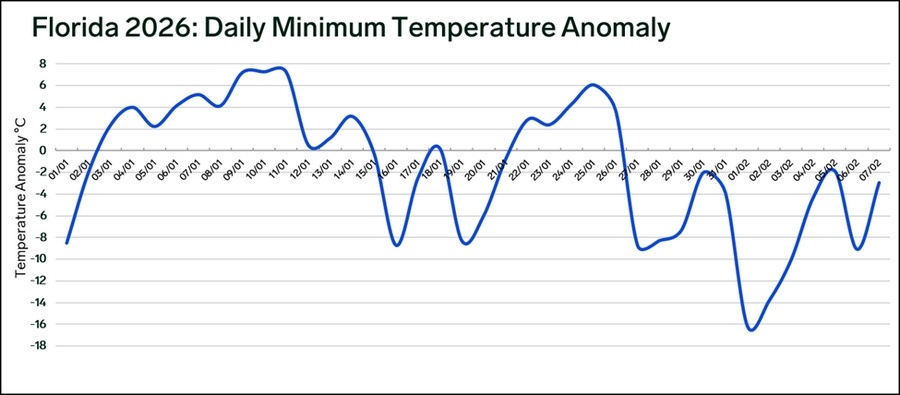
"Minimum daily temperatures were above average during the first half of January, until January 16, when they dropped about 8°C below the historical average. Temperatures then fluctuated, with two further temperature dips of roughly 8-8.5°C below the historical norm on January 19 and 27. Citrus fruits are currently maturing and are particularly vulnerable to freezing temperatures, as exposure to frost limits growth, damages fruits, and impacts citrus tree health. If trees are significantly weakened by extreme weather, then it could even hinder upcoming flowering periods, with the orange flowering season beginning in March," observed Demelza Knight, Weather and Crop Researcher, Expana.
Berry production is also under review. The North American Blueberry Council stated it is supporting affected growers and connecting producers with resources. Early-season strawberry volumes in areas such as Plant City were reported to have sustained damage following extended freezing conditions, despite mitigation techniques including irrigation-based icing.
The freeze follows recent hurricane disruptions, adding pressure to grower operations. In the short term, market sources indicate the potential for adjustments in pricing and supply across affected Florida-grown crops.
Source: Mintec/Expana