University of Florida scientists are joining forces at the Crop Transformation Center (CTC) to wage a high-tech war against pests and diseases threatening Florida's crops.
Through the CTC, faculty at the main UF campus in Gainesville and at the Citrus Research and Education Center (CREC) in Lake Alfred are working to find citrus varieties that can tolerate or even resist citrus greening, also known as Huanglongbing.
The CTC was established three years ago by the UF Institute of Food and Agricultural Sciences (UF/IFAS) and the state's citrus industry.
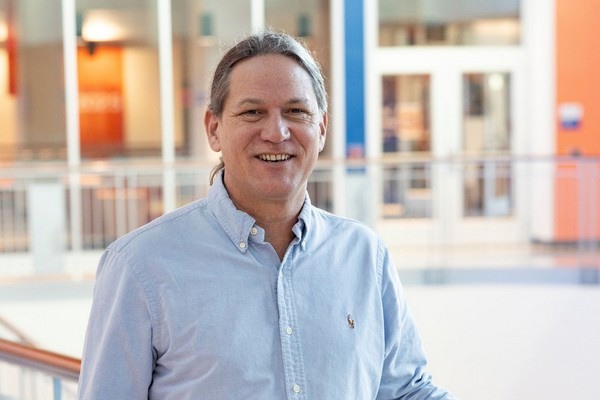 © UF/IFASCharlie Messina.
"Our purpose is to use tools like gene editing, precision breeding and artificial intelligence (AI)-driven data analysis to create plants that are healthier, more productive and more resilient to challenges like disease and climate stress," said Charlie Messina, director of the CTC and a UF/IFAS professor of horticultural sciences.
Researchers are identifying key genes that give plants natural tolerance to greening, introducing those traits into new citrus varieties and testing them in collaboration with Florida growers. CTC scientists study genes to enhance the plant-immune system so it can defend itself against greening.
"Our ultimate goal is simply to accelerate innovation in agriculture, protect Florida's signature crops -- starting with citrus -- and ensure that science in the lab leads to lasting impact in the grove," Messina said.
Scientists at a few UF/IFAS research and education centers are working with their colleagues in Gainesville to deliver data to growers.
CREC, in Lake Alfred, already had two transformation labs, said center director Michael Rogers. "Basically, the idea is to provide more resources to develop even more plants in a shorter amount of time that can be tested in the field," Rogers said.
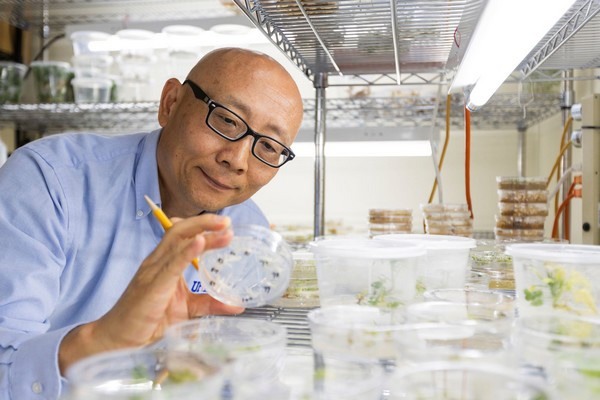 © UF/IFASAlfred Huo.
Alfred Huo, a professor of horticultural sciences in Gainesville and a CTC-affiliated faculty member, is one of about a dozen UF/IFAS faculty members who focus solely on citrus greening.
"While we benefit from CREC's extensive citrus resources, our optimized transformation protocols can help CREC and other Florida citrus researchers produce both transgenic and gene-edited materials more efficiently and reliably," said Huo.
In labs on the main UF campus, scientists study genes, develop new plant materials and create improved citrus lines -- the stage of a developing plant when it starts showing new genetic traits.
When researchers see promising plants, those plants go to CREC, where scientists test them to see how well they grow, Messina said.
For now, they're still in the research stage, so there are no finished products in growers' hands yet.
"Once we confirm the tolerance to citrus greening, the improved plants will reach farmers through nurseries that provide young trees for planting," Messina said. "The CTC, through its affiliated faculty, has produced several promising transgenic lines with traits that show the plants might tolerate greening."
 For more information:
Brad Buck
UF/IFAS
Tel: +1 (656) 347-8422
[email protected]
www.ifas.ufl.edu