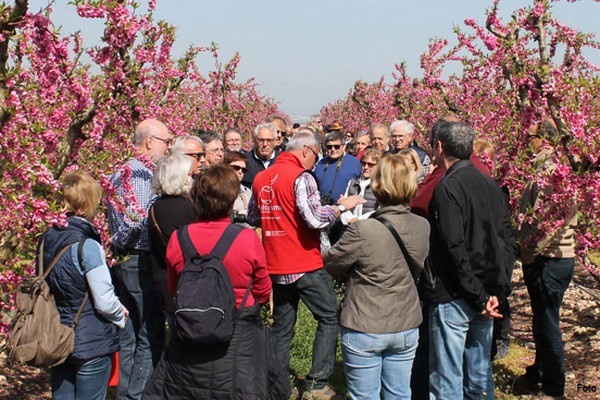
Afrucat, together with the Medfel fair and the Occitania Region, will host Interprunus on May 21 in the auditorium of the Rectorate Building at the University of Lleida, featuring key representatives from European producer organizations.
Interprunus aims to position Lleida as a central hub for the European peach and nectarine industry. The program will include crop forecasts for 2026 within the European Union, featuring representatives from key producing regions in Spain, Italy, France, and Greece. It will also provide an analysis of the stone fruit market landscape in a crucial context for the sector.
 © Afrucat
It will also feature a presentation on Infolineal, the new monitoring service for Spanish points of sale, as well as a roundtable discussion on international trade and the balance of the 2025 season, with a view to marketing prospects for 2026.
The event will close with two key topics crucial to the sector's future: the impact of the EU-Mercosur agreement on European production and the current status of phytosanitary defense tools, featuring insights from specialists and professionals.
Interprunus will also examine how the conflict between the United States, Israel, and Iran is affecting fruit prices.
Middle East-conflict increases fruit costs by 10% to 15%.
During the press conference unveiling Interprunus, the President and Managing Director of Afrucat discussed the current impact of the Iranian conflict on fruit prices.
Although marketing will not be affected, as the main market for Catalan fruit is the European market, problems are already being detected in maritime transit and container contract prices.
The most significant impact is anticipated in the coming days, when the first species, such as cherries and apricots, start appearing on shelves.
According to Manel Simon, Managing Director of Afrucat, "Fruit prices in general are expected to increase by 10% to 15%, as a consequence of a 15% increase in the price of materials, 6% in cartons, 35% in transport, and between 30% and 60% in fertilizer. Fortunately, Afrucat made its joint energy purchase in March, which at least allows us to maintain stability in energy prices for more than a year."
"The war has come at a particularly delicate time for fruit production, the first quarter of the year," stated Andreu Viladegut, President of Afrucat. "These are the months when most of the inputs for the plantations are purchased, such as herbicides and fertilizers. Although prices will recover tomorrow, this investment has already been made and will have a direct impact on the cost of the fruit."
Viladegut also emphasized that the effect on water costs must not be overlooked, particularly in regions like Segarra-Garrigues, where pumping relies on electricity and diesel.
Simon states that rising costs will ultimately impact fruit prices: "Although organized distribution is competing to attract consumers, someone in the value chain must absorb and pass on these costs. The primary sector can't do it, as it is already under significant pressure."
The event program is available here.
 For more information:
Afrucat
C/ Corregidor Escofet, 64
25005 Lleida - Spain
Tel: +34 973 22 01 49
www.afrucat.com