Back in 2006, a new fairtrade banana program was started, sourcing bananas from a cooperative in Ecuador. "It wasn't easy to start a new banana supply chain," says Jessie Myszka with Equal Exchange. "Bananas are usually the #1 item in the produce department, so switching supply chains felt risky." Despite all odds, Equal Exchange found retail and distribution channels willing to take the risk and offer shoppers an opportunity to buy bananas through a small-farmer, organic, Fairtrade program.
During the early years, the learning curve was steep with supply disruptions and a lack of consumer understanding being the biggest challenges. "However, changing the branding from Oké to Equal Exchange back in 2008 appeared to be a key turning point." That's also when Equal Exchange took on responsibility for leading the banana company.
 © Equal Exchange
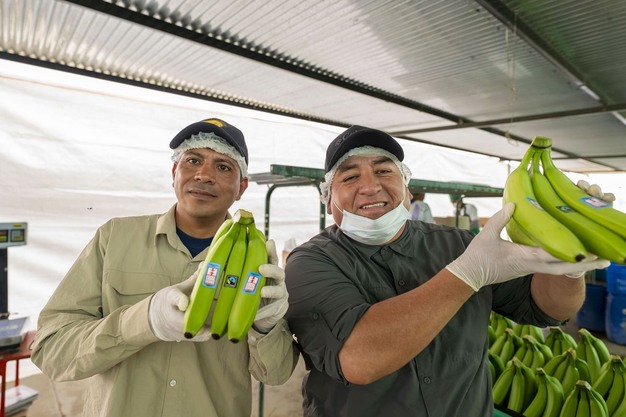
Edgar Talledo and Robert Carreno, co-op staff.
Covering coast to coast
In 2020, a co-op supplier from Peru was added and today, Equal Exchange still brings in Fairtrade bananas from both Ecuador and Peru. Over time, the banana program became more stable, and customers were increasingly willing to transition from conventional bananas to Equal Exchange bananas. "Back in 2006, we started in the Upper Midwest and Boston, but our bananas were available coast to coast by 2018," Myszka shared. Today, Equal Exchange bananas are distributed along most of the East coast, in the Upper Midwest, and in California.
Since then, banana volume has nearly doubled for the company, and this translated into a significant infusion of resources into farming communities. Just in 2025, more than $450,000 was paid in Fairtrade premiums. "That's money above and beyond the fairtrade minimum price and the organic differential," shared Myszka. Because of the democratic structures of the grower organizations, these funds are ultimately controlled by smallholder producers.
Consumer awareness
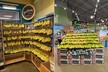
While Fairtrade bananas have been around for a few decades and most consumers know the banana industry is dominated by big brands, most of them are still not aware of a Fairtrade alternative. "However, when they learn about it, they want them available in their local store." The industry has a long way to go for Fairtrade bananas to become mainstream. "In Europe, penetration is much higher as in 2020, 10 percent of bananas sold were fairtrade." This is partly driven by larger grocery chains that have been offering them for decades sometimes. "We would love to see the U.S. locations of European grocery chains step up and make Equal Exchange bananas part of their produce sets," commented Myszka.
 © Equal Exchange
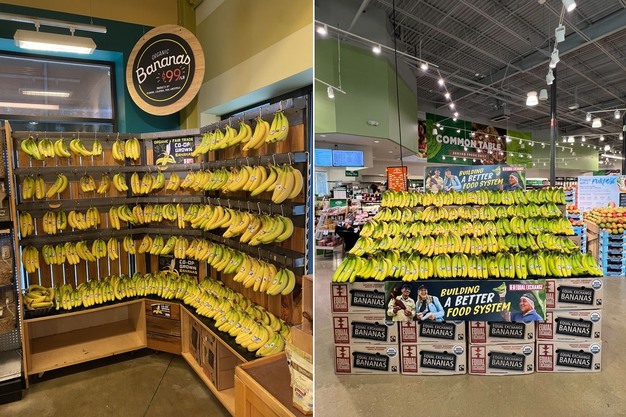
In-store displays.
Cheapest fruit
Within the banana supply chain, a few large players control all aspects of the production and logistics processes. "These major corporations have endeavored to make bananas the cheapest fruit on the market, regardless of the suffering that is required to keep that low price," says Mary Fangman, Supply Chain Coordinator at Equal Exchange. With a large supply of bananas available year-round, they can be produced at a lower cost per pound compared to many other fruits and are easier to transport compared to more delicate fruits as they are shipped unripe. As a result, bananas have been the cheapest fruit per pound in the grocery store for quite some time.
Price change is coming
Consumers have become used to bananas being so inexpensive as retailers have been hesitant to raise the price in an attempt to attract customers to the store. For long, bananas have been considered inflation-proof, but change is happening. "With gas prices continuing to increase, we have finally seen banana prices go up," said Fangman. The war in Iran also affects the availability of steamship containers and has resulted in fees and surcharges being added to normal shipping rates. With 25 percent of a retailer's case cost of organic bananas being freight related, these increases in importing and trucking costs are significant. Additionally, the implementation of tariffs last year resulted in bananas becoming at least 10-15 percent more expensive to import than before. "While bananas have now been given an exemption to these tariffs, increased costs across the economy make their way into the banana ecosystem."
While the competition with multinationals continues, Equal Exchange bananas are now on the shelves at more than 500 retail locations nationwide. There's still a group of retailers out there who would like to carry Fairtrade bananas but are afraid to make the change. "They fear that raising the price of their bananas to cover the fairtrade premium as well as the true costs that farmers are bearing will make shoppers think their stores are too expensive." In some regions, shoppers easily pay $1.09 - $1.39 per lb. and these numbers are even higher in places like New York City and San Francisco. Meanwhile in other markets, retailers are afraid to sell for more than 89 cents. "I understand supermarket margins are slim, but an organic banana costs about 62 cents. When comparing that to a domestically grown organic apple at $1.87 or a California organic navel orange at $1.70, I don't understand why a banana from overseas should be half that price," said Myszak. The effect of raising the price seems to be minimal as so far, none of Equal Exchange's retail partners have witnessed effect on volume. "We really respect retailers who have shown the courage to carry Fairtrade bananas and try pricing them a few dimes higher. We challenge others to do the same."
 © Equal Exchange
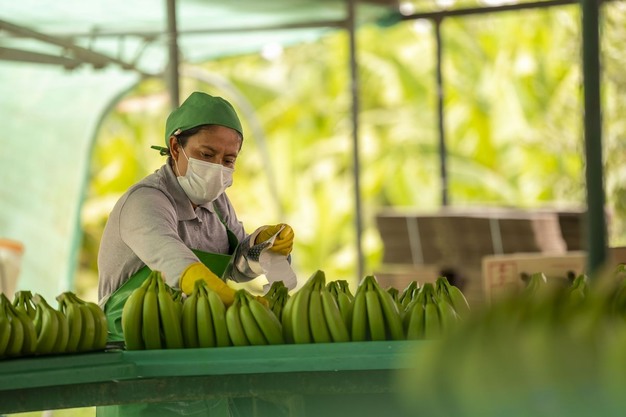
Packing station Río y Valle Cooperative.
More about grower-partners
Equal Exchange is partnered with Asoguabo in Ecuador which is a group with nearly 30 years of experience using their collective power to export containers of bananas to other countries. They're pioneers in the fairtrade banana space, and they continue to pride themselves on a pioneering spirit. "They are already working on ways to resist and combat the spread of TR4, including a lab where beneficial fungi for soil are formulated, as well as an organic fertilizer biofactory," says Kayla Nilson, International Supply Chain Manager for Equal Exchange. While keeping up with all the urgent crises the banana industry presents, they still have had time to open a solar farm in the past year that will help to power their offices, among other projects they elect to work on using their social premium.
Cooperativa Agraria Río y Valle, one of the company's partners in Peru, is also working to combat TR4, including some of the same measures used in Ecuador. In fact, their fertilizer production is directly inspired by that of Asoguabo. A few years ago, Equal Exchange helped to facilitate a visit to Asoguabo for several representatives from Río y Valle. When they saw the biofactory there, they went back to Peru and started working on theirs almost immediately. A short time later, they began providing fertilizer for their members using a similar model.
"The success of one farmer cooperative is not only impressive, it demonstrates and perpetuates a model that others can replicate. "Power to the farmers" is the end goal for Equal Exchange, and buying from cooperatives forms the basis of that."
 For more information:
Jessie Myszka
Equal Exchange
Tel: (+1) 503-548-1665
[email protected]
https://www.info.equalexchange.coop/