African airlines recorded a 6 per cent year-on-year increase in air cargo demand in 2025, while capacity rose by 7.8 per cent, according to IATA. Growth was supported by network expansion, increased integration into global supply chains, and continued demand for perishables exports.
The first months of 2026 showed continued growth. Demand increased by 18.2 per cent in January and 21 per cent in February, while capacity rose by 6.5 per cent and 17.3 per cent respectively. The Africa-Asia trade lane, representing 1.3 per cent of market share, recorded 41.6 per cent growth in January, marking the seventh consecutive month of expansion.
Exports from Africa to Asia include perishables such as fruit and vegetables.
Despite the strong start, IATA forecasts 2 per cent growth for the region in 2026, compared to global demand growth of 2.6 per cent.
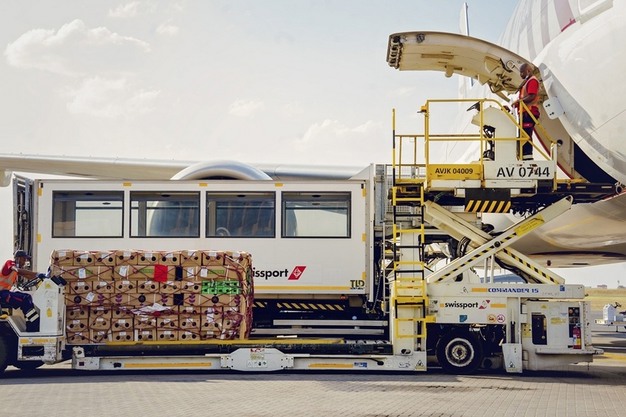 © Swissport
Industry operators indicate that perishables, pharmaceuticals, and e-commerce are driving cargo flows. "We expect stable to moderately positive growth in 2026, despite ongoing geopolitical and economic uncertainties," said Sanjeev Gadhia of Astral Aviation. "Airfreight remains essential for time-sensitive supply chains."
Intra-African demand is also expected to increase, supported by the African Continental Free Trade Area (AfCFTA). "Africa is one of the most promising air cargo growth regions globally," Gadhia said. "With AfCFTA gaining traction, we anticipate stronger intra-African trade, increased regional connectivity, and growth in perishables flows."
Ground handling volumes reflect this trend. Swissport handled around 400,000 tons of cargo in Africa in 2025, representing 8 per cent of its global cargo volume. The company reports continued demand for perishables alongside growing requirements for temperature-controlled logistics.
Supply chain adjustments are also shaping cargo flows. Diversification of sourcing and manufacturing, alongside changes in trade policies, is redirecting volumes towards emerging markets and alternative trade routes, including intra-African corridors.
Airlines are responding through fleet renewal and network expansion. Astral Aviation is replacing older aircraft with larger freighters and evaluating long-haul capacity, while Kenya Airways Cargo is expanding routes to the Middle East and Asia, with perishables on outbound flights.
Constraints remain, including high operating costs, infrastructure gaps, regulatory fragmentation, and restricted access to airline funds. IATA reports that US$1.2 billion in airline funds remain blocked from repatriation, with 93 per cent located in Africa and the Middle East.
Industry stakeholders continue to engage with governments to improve connectivity, streamline customs processes, and support trade under AfCFTA, with a focus on maintaining cargo flows for perishables and other time-sensitive products.
Source: Aircargo News