The mango season in India will have different outcomes depending on the variety. For Alphonso mangoes, the season might be more challenging than for other varieties, says Yashwant Chakve Patil, director of Indian fruit exporter AA Reyach International:
"The 2026 Indian mango season has begun on a mixed and regionally divergent note. Early arrivals from Maharashtra, which is the Alphonso belt, started on schedule in mid-March, aligning with typical crop cycles. However, the season has quickly been characterized by weather-induced variability. Western India, like Ratnagiri and Sindhudurg, has reported severe crop damage due to erratic flowering and climatic stress, particularly impacting Alphonso," he states. "The southern regions like Andhra Pradesh, Karnataka, and Tamil Nadu are witnessing relatively stable progression, with steady arrivals expected through April and May. Overall, the season is not uniform; it's strong in some belts, but significantly weaker in premium Alphonso-growing regions, creating an imbalanced supply landscape."
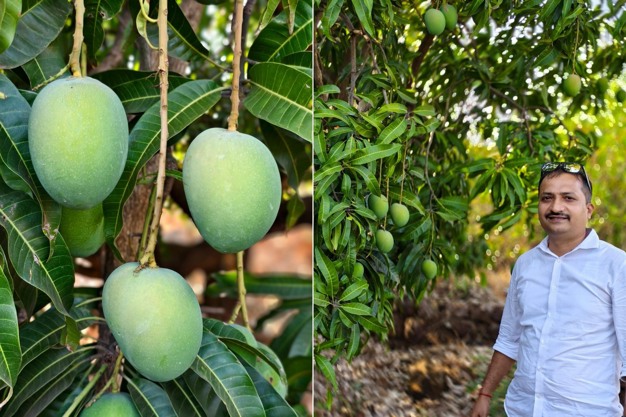
According to Patil, availability for Alphonso will be very limited this season compared to other varieties. "This year, volumes are highly segmented. Availability for premium varieties like Alphonso is significantly lower due to climatic disruptions, while other varieties such as Kesar, Banganapalli, and Totapuri are relatively stable. In overall terms, India's total mango yield remains strong, but export-quality premium fruit is clearly tighter than last season."
Other than availability, the mango exporter has been thrown several other challenges its way, Patil explains: "Climate variability has affected both yield and consistency. Alongside this, logistics and compliance requirements remain critical, especially for high-value export markets. To manage this, we focus on diversified sourcing, strong farmer partnerships, and investing in post-harvest handling and cold-chain systems. Flexibility and planning have become essential in today's market."
The lower volumes for Alphonso mangoes have a natural effect on the pricing this year, Patil emphasizes. "Prices, especially for premium varieties like Alphonso, are significantly higher compared to last year, due to the supply shortages. At the same time, prices for other varieties are relatively stable, supported by good availability. Overall, the market is seeing a clear premiumization trend, where quality fruit is commanding strong value."
The conflict in the Middle East has also had an impact on the exporter's operations: "The Middle East is a key market for us, so any geopolitical tension has an indirect impact. We're seeing some volatility in freight costs and minor logistical challenges. However, demand in the region remains resilient, and trade flows are continuing without major disruption. So far, the impact is more operational than demand-driven."
"We expect the season to remain strong in terms of demand, but constrained on the supply side, especially for premium varieties. The focus will be on quality, efficient supply chains, and market diversification. Overall, it's shaping up to be a high-value season rather than a high-volume one, and exporters who can manage consistency and quality will perform well. This is not a volume-driven season; it's a value-driven one. The winners this year will be those who can balance quality, reliability, and have smart market positioning," Patil concludes.
For more information:
Yashwant Chakve Patil
AA Reyach International
Tel: +91 98921 72 863
Email: [email protected]
https://aareyach.com/