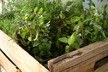
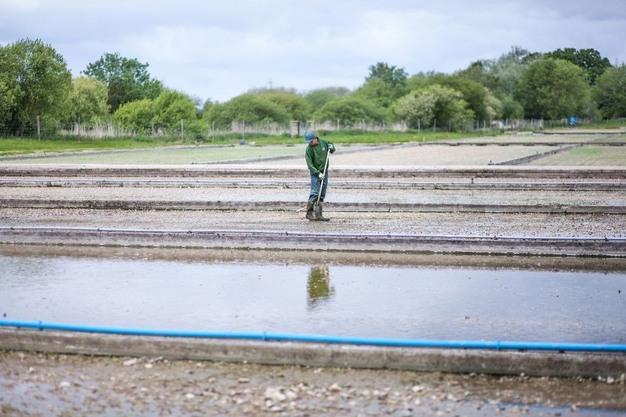
The Watercress Company farms 16 hectares of beds, but as they are cropped multiple times, the area could be likened to 96 hectares. The watercress is grown outside on large Victorian-built watercress beds. They are gravel on chalk, based on which the watercress plant clings as spring water flows through the beds bubbling up from underground aquifers. This natural spring water is full of nutrients and minerals that the watercress plants absorb.
"We are very proud that for the last 25 years we have not used any pesticides on our beds, so they are alive with insects. I strongly believe that our way of farming is not only environmentally good, but morally and ethically good too. It's not without commercial risk - last summer we had to bypass 50 tonnes of watercress because of a sawfly infestation, but as a one-in-10-year event, it's a testament to our resolve to stick to pesticide-free," said Tom Amery, MD of The Watercress Company. "We strongly feel that our story would appeal to the growing numbers of consumers who really care about pesticide use, but until we can show it on our packs, they just can't be told about our achievements."
 © The Watercress Company
Harvesting
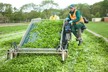
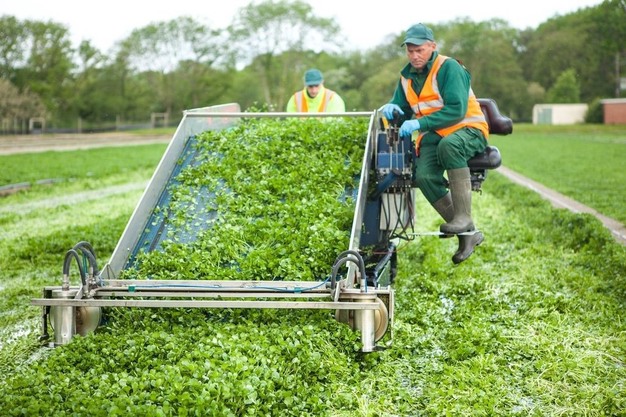
When it comes to harvesting the crop, things have changed somewhat, as it used to be picked by hand. Nowadays, 24 hours before harvest, the crop is rolled to 'comb the watercress' with two people rolling side by side to push the watercress flat, just under the surface of the water. Turning at the top of the bed, the other half of the bed is rolled in the opposite direction, making the watercress 2-tone, a little like stripes in a mown lawn. The flattening of the watercress means that it then rises back up in an organised way and with a slightly bent stem. This makes harvesting easier as the harvester drives in the opposite direction to the rolled crop and cuts a nice, even sprig.
"For actual harvesting of the crop, we have developed our own specialist sit-on harvesting machines with a second person following behind with barrows catching the watercress as it flies off the rear of the belt at speed. These machines not only make harvesting quicker and more efficient, but they have also been designed to protect insect life and ensure as few as possible end up on a consumer's plate. The harvester includes shaker belts that gently agitate the crop when it's been cut, removing the majority of insects by 'bouncing' them off and returning them to the watercress beds."
 © The Watercress Company
Importing to supplement supply
For 35 years, The Watercress Company has also owned and managed farms in Spain to help supplement supply through the winter when UK production is slower, and also at peak times in the summer. "We do import, but try to educate consumers that the watercress is effectively still grown and owned by The Watercress Company, a UK business. We are, however, looking to increase the number of UK watercress beds to satisfy the UK supply and allow the Spanish watercress to be sold in mainland Europe in the long term.
"At The Watercress Company, we sell the majority of our crop through retail – we sell about half a million bags each week. We do sell some in food service and are currently in talks with a major wholesale and catering company to make use of our excess and waste crop in specialist watercress-based products like pesto, which we call 'Cresto'."
 © The Watercress Company
Specialist packers
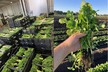
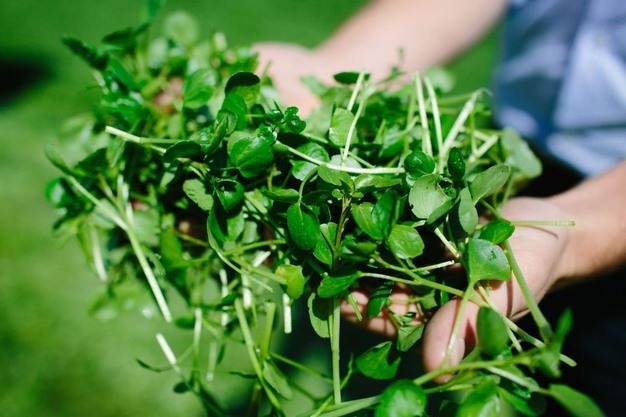
"Due to our non-pesticide policy, we had to source specialist packers with advanced wash systems to rinse the crop and ensure any remaining insects are removed before the watercress is packed into the bags. The packers have had to accept that the occasional imperfection, such as a small hole in the leaf, is a sign of truly chemical-free farming and not a cause for rejection. But, for the most part, the pesticide-free practices allow us to produce a perfect quality product that works with nature, not against it. In fact, for 25 years, we've produced and sold over 60 million kilograms of residue-free watercress on our farms in the UK and Spain without the consumer knowing."
 © The Watercress Company
Watercress regaining popularity
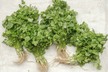
Watercress saw its peak of popularity in Victorian times, but in the 1960s, when air freight became easier and other, more exotic salad leaves were introduced, watercress became relegated to 'just a bit on the side'. For the last 25 years the watercress industry has worked hard to reinstate watercress as a key ingredient in British cuisine through working with chefs, establishing an annual Watercress Festival in Alresford, Hampshire, the 'capital of watercress' (this year on 17 May) and now in its 22nd year, while work with researchers and scientists has slowly revealed the amazing health benefits of watercress. These are largely due to the high levels of a compound, Phenethyl isothiocyanate (PETIC), which gives watercress its distinctive peppery taste and has been proven to have potent anticancer, anti-inflammatory, and antioxidant properties.
Over the last quarter of a century, sales of watercress have consistently increased, and as more independent research is published.
"Part of the appeal of watercress is its versatility, but if used in cooking, it's best added right at the end to experience minimal heat. This is because watercress is best eaten raw, as the process of chewing is actually what releases and activates the PEITC. Therefore, salads incorporating watercress are hugely popular, but also smoothies, pesto, stir fries, and soups are great, and all packed full of the over 50 vital vitamins and minerals watercress contains."
For more information:
Tom Amery
The Watercress Company
Tel: +44 (0)1929 401400
[email protected]
www.thewatercresscompany.com