afreshed, the market leader for organic food boxes in Austria, announced the acquisition of its German competitor etepetete in week 14. The parties have agreed not to disclose the purchase price. With this transaction, afreshed is marking the start of its expansion into the German market; to this end, the organic delivery service has completed a financing round in the mid-seven-figure range. The investor is Raiffeisen-Holding Niederösterreich-Wien, which specializes in food and luxury goods, among other sectors, acquiring a 25.1 per cent stake in the company. With Raiffeisen-Holding NÖ-Wien on its side, afresh gains a strong strategic partner that supports its long-term growth strategy: expanding market leadership in German-speaking regions.
Expanding market leadership and internationalization
With etepetete, the founders have acquired an established competitor that has customers in every federal state, particularly in Baden-Württemberg, Bavaria, and Berlin. Bernhard Bocksrucker, co-founder of afreshed, comments on the acquisition: "The etepetete brand will remain intact. The acquisition not only gives us immediate market presence but also local expertise and an existing customer base we can build upon. This transaction is intended to be merely the first of its kind, with further steps toward internationalization to follow. Our goal is to become the leading provider of rescued food in German-speaking regions. Under the joint brand, we will further strengthen the visibility of the Retterboxen."
Lukas Forsthuber, co-founder of afreshed, emphasizes, "etepetete has always been a role model for us and has significantly shaped the market. The fact that we are now acquiring this company is a special step for us and, at the same time, a great source of motivation for the coming years."
 © afreshed GmbH
etepetete's development
Since its founding in 2014, Christopher Hallhuber and Georg Lindermair have built etepetete into the market leader for online organic food boxes in Germany. During the pandemic, the company grew significantly once again and was profitable in 2020 and 2021. At its peak, etepetete employed around 130 people. Amid difficult market conditions in 2022, etepetete—like many e-commerce brands—recorded a decline in revenue for the first time since its founding. Subsequently, the founders steered the company back onto a stable and profitable course. etepetete has been profitable again since Q4 2024.
As part of the acquisition, the Munich-based founders are now handing over operational responsibility to Vienna. "We are very excited about the merger of the two brands. The three afreshed founders have demonstrated in a short time how to build a strong, service-oriented company even under difficult market conditions. We are convinced that the planned changes will have a very positive impact on the future development of etepetete. We thank our team, our shareholders, and our partners for the great collaboration over the past years, without which etepetete's positive development would not have been possible. Furthermore, we are excited and look forward to continuing to follow the further development of etepetete and afreshed in the future," said the two founders of etepetete.
Expansion of logistics infrastructure and digitalization
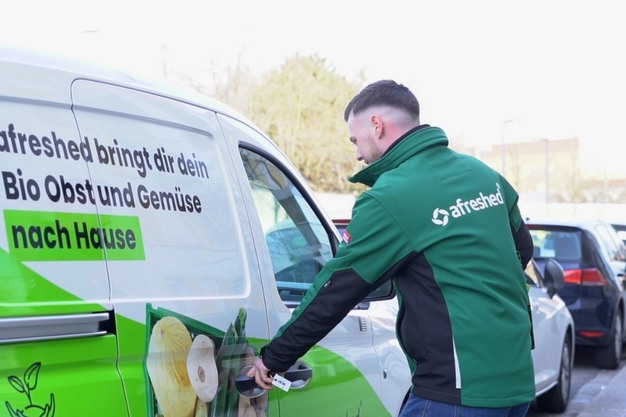
The founding trio has proven that the business model of the Vienna-based organic delivery service works and is scalable. The delivery service operates nationwide in Austria and has reached the break-even point. Thousands of deliveries are made daily to end customers in Germany and Austria. The founders have continuously improved the model, heavily digitized their product, and invested in their own logistics infrastructure, which forms the core of the business. afreshed maintains its own delivery fleet in Austria with nearly 20 vehicles. Routes are planned using custom-developed software to optimize CO₂ emissions. This ensures that the so-called "last mile"—the final step from the distribution center to the end customer's doorstep—is efficiently organized.
"While the fruit and vegetable business is a stable and strong niche market, digitalization has largely bypassed our agricultural market segment. The fresh capital is flowing into the expansion of the logistics infrastructure and selective product expansion," says Maximilian Welzenbach, commenting on future plans. A central element of the German expansion strategy is the development of such a logistics infrastructure, similar to that in Austria, which does not yet exist in this form on a national scale: afreshed is introducing the first nationwide reusable packaging concept in last-mile logistics, enabling a closed-loop circular economy for packaging.
The transition will take place gradually by federal state—starting in the south and moving northward—and marks a structural shift away from pure online shipping toward a genuine organic delivery service. This is made possible utilizing the company's own fleet of vehicles: the drivers not only ensure reliable, personalized delivery quality—as customers are accustomed to from other service sectors—but also facilitate the return transport of the reusable boxes. For end customers, this means a noticeably better experience: on-time delivery by a familiar face, combined with a consistently sustainable packaging model.
Growing online market for FMCG products
According to Statista, online food sales in Germany have been steadily increasing in recent years. In 2024, online food retail sales reached nearly four billion euros. Furthermore, with an annual growth rate of around 7.3 per cent in 2024, the online market for FMCG products is one of the most dynamic online markets in the country. Approximately 11 million tons of food are discarded annually in Germany on the journey from field to plate, with around 200,000 tons of that coming from agriculture alone—even though 85% of it could be prevented, according to the Consumer Advice Center.
In private households, fresh fruits and vegetables account for 35 per cent of all avoidable food waste. Fruits and vegetables that do not meet standards sometimes do not make it to store shelves and are sometimes destroyed directly by the producer. "The founding philosophy of both companies is essentially the same: saving food and passing it directly on to consumers. All of this through an optimized supply chain. In recent years, we have independently demonstrated the potential of this vision. With the acquisition of etepetete, we are now taking the next logical step in our expansion and joining forces to further strengthen this shared mission," adds Lukas Forsthuber.
Annual revenue is in the eight-figure range
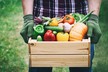
Organic fruits and vegetables that cannot be sold or do not reach consumers at all are packed into so-called "Retterboxen" and delivered directly to customers' and businesses' doorsteps. The main suppliers are currently around 15 farms from Austria and Italy, with a total of 50–70 different producers participating in the program. Current annual revenue is in the eight-figure range.
For more information:
Lukas Forsthuber
Managing Partner
afreshed GmbH
Gumpendorferstraße 32 / Top 27
A-1060 Vienna
[email protected]
www.afreshed.at