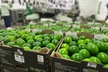
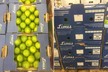
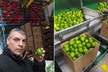
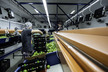
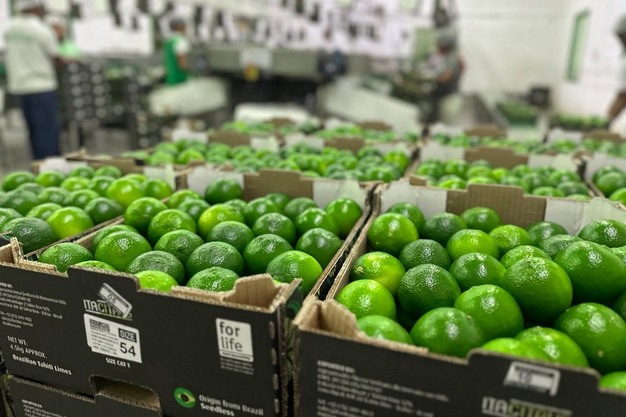
"Over the last 15 years, the Brazilian lime production has remained very stable at around 1.2 million tons. This volume hasn't grown for a long time," says Waldir Promícia, CEO of Itacitrus. He also points to the fact that the acreage, approximately 60,000 hectares, is undergoing a constant process of renewal.
 © Itacitrus
This balance responds to a dynamic in which new plantations make up for the loss of productive areas, often affected by phytosanitary issues. Among the main challenges are diseases such as greening and citrus canker, which increase costs and condition new investments. "Growers know that they'll have to tackle these pests from the very beginning," he says.
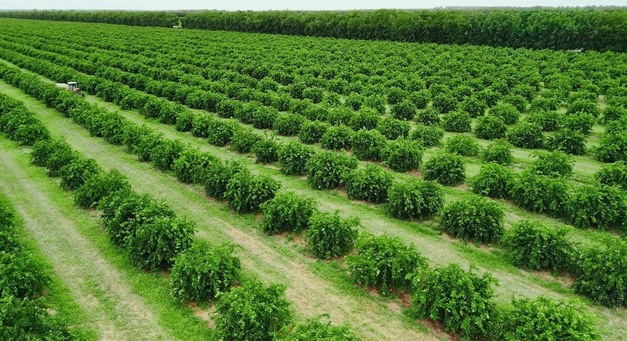
In geographical terms, the state of São Paulo has traditionally been the leader, but now there's starting to be some diversification with the rise of new regions, such as Bahia, where both acreage and exports are growing.
 © Itacitrus
Brazil maintains a differentiated position in the international market thanks to its capacity to deliver a constant supply. Unlike other major producers, the country is not limited to certain periods for the export of Tahiti limes. "Brazil is the only country supplying limes to Europe all year round," says Promícia.
This regularity has allowed the country to gain market share against competitors such as Mexico, whose supply peaks within certain periods. As a result, Europe is consolidating as the main destination for Brazilian exports.
 © Itacitrus
Consumption is also showing a positive trend. In the domestic market, annual growth ranges between 5% and 8%, driven by a greater awareness of the product's beneficial properties. "Once consumers start, they never stop buying limes," he says. "In Europe, increases of up to 15-20% can be recorded in certain years; a trend driven by healthy lifestyle habits."
Despite this data, market behavior is still highly volatile, especially in terms of prices. Promícia acknowledges the difficulty in anticipating trends. "Lime is a very difficult product to analyze; nobody knows exactly why prices rise."
Indirect factors such as the supply of other citrus fruits or changes in consumer habits can have an unexpected impact on the demand.
 © Itacitrus
The sector is also facing logistical and tariff constraints. A tariff of 12.8% is imposed on Brazilian exports to Europe, unlike those of competitors such as Mexico and Peru. On top of this, port infrastructure is still under development.
"This tariff is collected by the European Union and not by Brazil. We are the only country that's still paying it. Every other country exporting limes to the EU is exempt, as it is an import tax. Thanks to the agreement signed between Brazil and the EU, this tariff should be eliminated in seven years," he says.
In any case, these barriers have not slowed down export growth. "The combination of year-round supply, quality, and geographical expansion positions Brazil as a key player in the global Tahiti lime market, with prospects for continuity, rather than accelerated expansion," he says.
 For more information:
Waldir Promícia
Itacitrus
Brazil
Tel.: +55 11 99983 8173
[email protected]
www.itacitrus.com.br