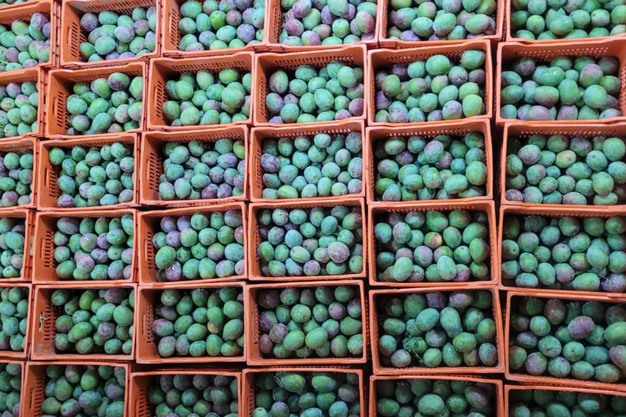
Indicators on the ground suggest a rise in mango production in Senegal this season, as well as an early start to the export campaign. Production conditions are favorable, and significant efforts are being made to prevent the fruit fly, which marred last season's campaign, from affecting exports. This is according to Makhou Diop, an agricultural technician at Notto AI.
 © NottoAI
The grower, with 15 years of experience in growing mangoes for export and operating in the Niayes region, says the 2026 season looks promising. He explains, "We are seeing abundant flowering and good fruit set, which occurred before the arrival of morning dew, a factor that usually promotes fungal diseases such as anthracnose and downy mildew. If conditions remain favorable, we estimate we can reach 30,000 tonnes nationwide this year. We are currently monitoring the development of the fruit, as climate variability can lead to unforeseen issues."
According to Diop, current temperatures and hours of sunshine point to an earlier start to the growing season compared to 2025. "In the Niayes region, irrigated plots are one week ahead of non-irrigated plots. The central and southern regions, meanwhile, are one week ahead of the Niayes region. That's why I say we'll be able to kick off the season between late May and early June," the grower continues.
The main concern remains the fruit fly. Diop assures that significant efforts are underway: "The Government of Senegal, through the Plant Protection Directorate (DPV), has committed to protecting mango orchards with biological treatments administered by drones on a national scale. The role of producers remains crucial, through awareness-raising and training in good agricultural practices, including during harvest, the systematic collection of fallen fruit, and orchard sanitation."
For more information:
Makhou Diop
Notto AI
Tel: +221 77 382 17 71
Email: [email protected]