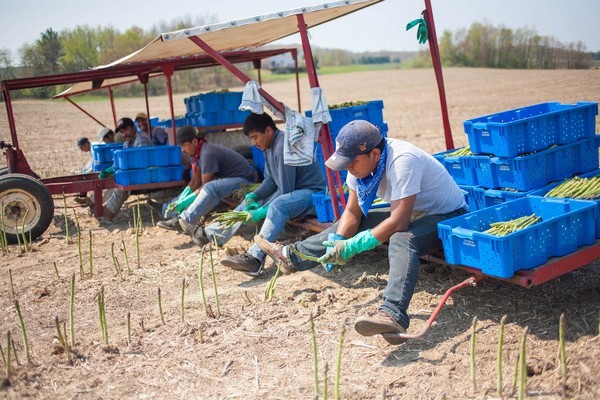
Following a long cold winter, Michigan asparagus is expected to start on time this year. "That means volume will be starting May 10th," says Trish Taylor, marketing manager for Riveridge Produce Marketing, Inc., noting a limited run often starts a bit sooner. "It will be pretty much an average start to the season."
 © Riveridge Produce Marketing, Inc.
While typical Michigan winters might see random warm days, this year's winter has been consistently cool with snow, especially further north in the state where asparagus is primarily grown. Asparagus is also grown in southwest Michigan as well but in smaller volumes. "A cold winter in Michigan is always good because it creates a solid dormancy for the next growing cycle," she says, noting that the season will run for about eight weeks.
While everything else around asparagus looks as per usual in Michigan, the state that grows the most asparagus in the U.S., what is different is there is a slight industry acreage reduction. Some farms in the north have been sold to redevelopment, though none of those are under the Riveridge label.
How about demand? What is that anticipated to look like this season? "Demand can be tough because Americans are used to getting asparagus year round at a consistent price. Areas such as Peru and Mexico grow substantial volumes and they grow it in such a way that they can turn on and turn off their fields. They could have two seasons a year," says Taylor.
 © Riveridge Produce Marketing, Inc.
The economics of U.S. asparagus
That means, with the costs of growing, packing, freight and more continuing to rise in Michigan, U.S. asparagus isn't necessarily cheaper for consumers. Ultimately then, it's up to the Michigan asparagus industry to drive demand.
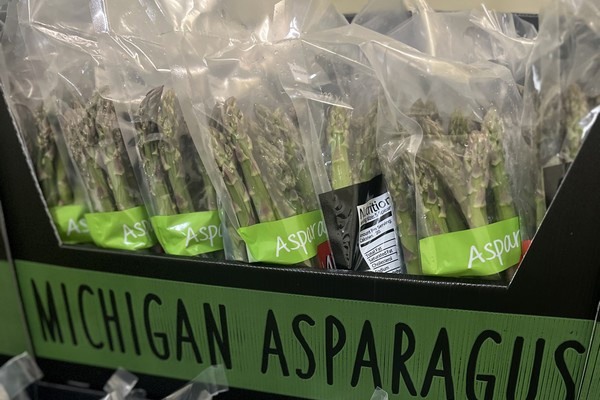
There are an assortment of reasons though that would draw consumers towards buying U.S. asparagus, starting with the interest in buying local to support state growers. "Michigan asparagus growers often grow many other commodities, especially apples, cherries and peaches. The income from asparagus helps to fund the growing costs for the later produce," she says.
Other reasons would be that it's fresher with a longer shelf life, having largely been picked the day before appearing on store shelves thanks to a shorter field to packing to store journey.
 © Riveridge Produce Marketing, Inc.
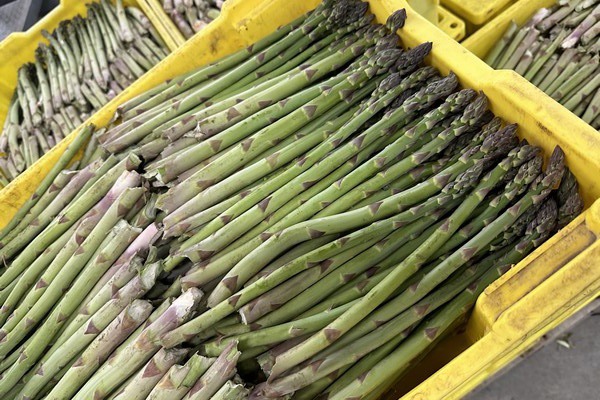
"Michigan really invests in the economy of our agriculture, and one of those is an asparagus research farm," says Taylor. "In collaboration with Michigan State University, the state is trialing dozens of varieties in search of those that perform well in yield, disease resistance, even size profiles that satisfy the current trends. Innovation even happens in asparagus."
As for pricing this season, it's expected to strengthen a bit. "One unknown will be changes to freight costs, depending if fuel costs continue to rise. These days, that can change very quickly," says Taylor.
 For more information:
Trish Taylor
Riveridge Produce
Tel: +1 (616) 887-6873
[email protected]
www.riveridgeproduce.com