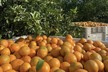
Vietnam has more than 260,000 hectares of citrus orchards, representing over 20 per cent of the country's total fruit cultivation area. Around half of this citrus production is located in the Mekong Delta. Most farms are smallholder-owned family operations averaging one hectare and supporting households of about four people, meaning more than one million people depend on citrus farming for their livelihoods.
Citrus is also an important part of domestic consumption. Each year, Vietnamese growers supply approximately 3.5 million tons of oranges, pomelo, mandarins, and limes to the local market.
 © The Fruit Republic
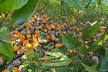
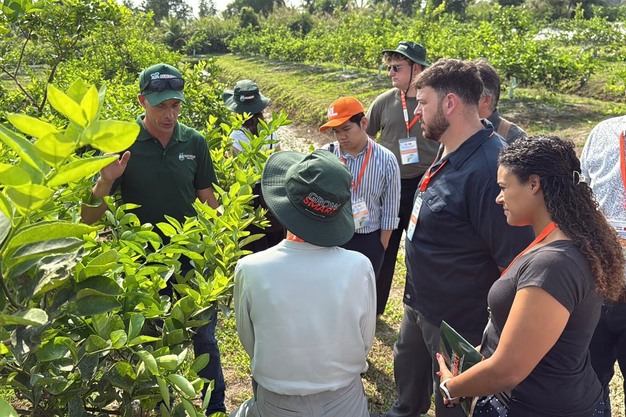
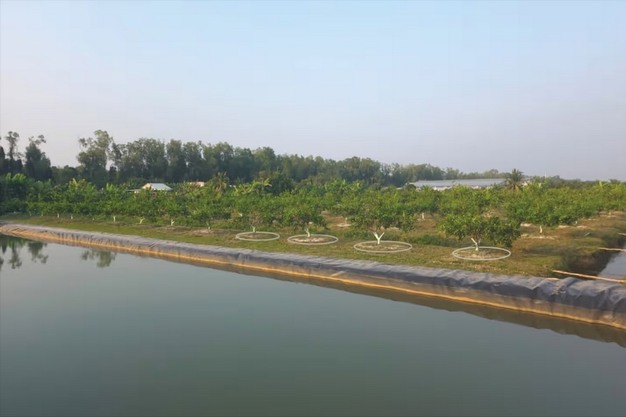
Most citrus smallholders are located in the Mekong Delta and Southeastern Vietnam, where farmers face several production challenges. These include disease pressure such as Citrus Greening Disease and Phytophthora, climate change impacts including salinization of the Mekong Delta due to rising sea levels and land subsidence, and shifting seasonal patterns with longer dry periods and heavier rainfall that can lead to orchard flooding. Farmers also report limited access to high-quality, disease-free seedlings and technical guidance for soil and nutrient management.
As a result of these conditions, citrus orchards in the Mekong Delta often have short economic lifespans. Orange trees are frequently removed after only a few years, while lime orchards are typically replanted after around seven years. Pomelo trees take longer to produce fruit. Because citrus trees require two to four years before producing harvestable yields, farmers may experience periods of negative cash flow before a limited number of productive seasons.
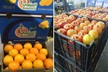
Despite these challenges, value chain development initiatives are emerging. The Dutch-Vietnamese fruit company The Fruit Republic has developed domestic and export markets for Vietnamese citrus since establishing operations in Can Tho in 2012. The company operates packing and fresh-cut facilities in Can Tho and distribution centers in Hanoi, Ho Chi Minh City, and Rotterdam in the Netherlands. Through contract farming, extension support, and quality assurance systems, the company has built a supply chain connecting citrus growers with markets in Asia, Europe, North America, the Middle East, and Oceania.
 © The Fruit Republic
To support the sector, The Fruit Republic and five partners launched the SUCCEEDs project, short for Sustainable Citrus Chain Empowering and Developing Smallholders in the Mekong Delta. The initiative aims to improve profitability and sustainability for 150,000 citrus smallholder farmers.
The project is implemented by Kloosterboer, The Fruit Republic, Rabo Foundation, Can Tho University, and the Department of Agriculture and Environment of Tay Ninh Province. It is supported by the Dutch Ministry of Foreign Affairs' Sustainable Development Goals Program and managed by the Netherlands Enterprise Agency.
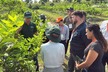
SUCCEEDs focuses on strengthening the citrus value chain through training programs for farmers and extension staff at citrus training farms, support for certification such as GLOBALG.A.P., GRASP, and LEAF standards, tailored nutrient management advice, access to finance for farm infrastructure and technologies, and improved seedling supply from professional nurseries.
To view the full report, click here.
For more information:
MLVVN
Email: [email protected]/ [email protected]
www.agroberichtenbuitenland.nl