The conflict in Iran is having serious repercussions for the international transportation sector, affecting Italian and European fruit and vegetable exporters. Riccardo Martini, the CEO of DCS Tramaco, an Italian company that specializes in transporting produce by sea, describes the current situation.
"This is the third major disruption to international transport in just a few years," says Martini. "After the Suez Canal crisis and the pandemic, the war in the South West Asia and North Africa (SWANA) area is once again severely testing global logistics and its operators, including freight shippers. Hopefully, the repercussions will not be worse than those of previous crises, but that depends on the timing, outcome, and consequences of this conflict, all of which are completely unpredictable at this stage."
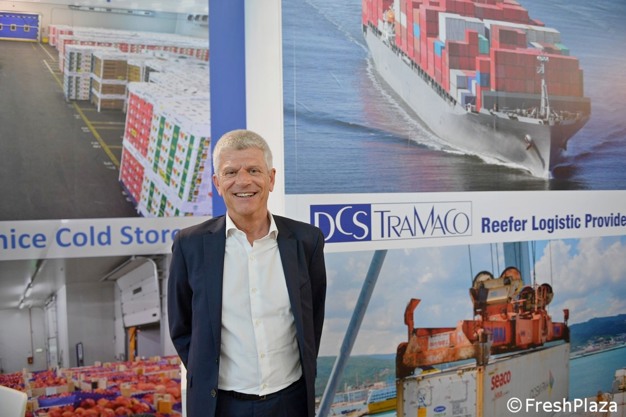 © Cristiano Riciputi | FreshPlaza.comRiccardo Martini
Exporters with containers on board ships bound for the Persian Gulf or in Italian ports awaiting departure are holding their breath. Carriers have applied a War Risk Surcharge ranging from $3,500 to $4,500 to containers that have departed for the Persian Gulf (including the United Arab Emirates, Qatar, Bahrain, Kuwait, and Oman). These containers will be unloaded at the first safe port, at the company's discretion, which will mark the end of the voyage. Customers will bear all costs for returning containers or sending them to another destination. For example, containers bound for Jeddah could potentially be unloaded in Nhava Sheva, India. Containers that have been filled and taken to the ports but for which shipping companies have canceled bookings could be returned to exporters' warehouses. In this case, the exporter would be responsible for all costs. Alternatively, the containers could be sent to a port outside the Persian Gulf. The exporter would also be responsible for all terminal storage costs in this case.
A central issue is whether the owners of the merchandise can object to these unforeseen costs or recoup them from the insurance company. "In this regard," Martini points out, "this is the question we have been asking our insurers and maritime lawyers since last Monday. Unfortunately, the answers leave little hope. While the clauses in the bills of lading seem to give maritime carriers this option, the standard War Risks insurance does not typically cover this type of damage. Claims based on loss of or termination of the voyage are excluded."
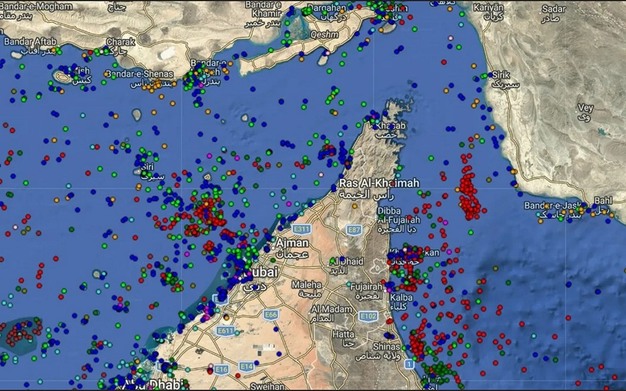 Blocked Ships
Martini confirms that maritime fruit exports to the SWANA area would be halted until further notice in such a scenario. "Unfortunately, yes. No new bookings are being accepted for ports in the Persian Gulf. A few companies are accepting new bookings for Red Sea ports, such as Aqaba, Jeddah, and King Abdullah, but they are charging War Risk Surcharges ranging from $3,500 to $4,500 per container. This is a serious detriment for our producers. Dubai, a destination no longer reachable by sea, is one of the most important destinations for our exports, as is Jeddah, Saudi Arabia. Although this port is still theoretically reachable, the war risk surcharge burdening goods is unlikely to be absorbed by Saudi producers or importers," he says.
"The problem is that there could be repercussions for traffic headed to areas not directly affected by the conflict in Iran. We are already seeing this. Modern maritime logistics is a complex, interconnected system. The surge in oil prices has prompted shipping companies to implement an Emergency Fuel Surcharge (EFS), impacting routes not directly involved in the conflict. Transit times to destinations in the Far East are increasing again because companies that had started using the Suez Canal stopped and returned to the route via the Cape of Good Hope. Additionally, a long-lasting blockade of the Strait of Hormuz could have very negative effects. According to a Seatrade Maritime report today, around 140 container ships are currently stuck in the Strait of Hormuz and unable to continue their journey due to the Iranian Pasdaran blockade. The Pasdaran have already attacked one of the ships. These ships account for 10-15% of the world's container fleet of around 470,000 TEUs. If the blockade continues, there will likely be two consequences: a shortage of empty containers and increased freight rates due to reduced capacity for shippers.
Companies that organize logistics are dealing with the consequences, and DCS Tramaco is no exception. Martini concludes, "This conflict will negatively impact our work as well. Many shipments destined for SWANA will be lost. For now, our main concerns are assisting our customers involved with shipments to SWANA, keeping them informed, and studying the best and least burdensome solutions with them. One way we are doing this is by making our group's foreign subsidiaries available to customers to help handle containers that have been diverted and unloaded by companies in other ports, such as those in India."
For more information:
DCS Tramaco
Via Magazzini Anteriori, 63 - Ravenna (Italy)
+39 0544 426711
[email protected]
www.tramaco.net