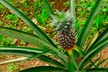
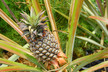
Smallholder farmers in northern Ghana are testing pineapple cultivation as part of a diversification strategy in response to delayed rains, rising temperatures, and prolonged dry spells that have disrupted cereal and legume production.
In 2024, the U.S. Government funded the Feed the Future Ghana Mobilizing Finance in Agriculture project, which launched a 15-acre pilot, equivalent to approximately 6.07 hectares, across six districts in the Northern, Upper East, and Upper West Regions. A total of 60 farmers received about 300,000 pineapple suckers, with each farmer cultivating an average of a quarter acre, or approximately 0.10 hectares.
The intervention followed earlier trials in the Ashanti Region and aimed to introduce a crop with established domestic and export markets. "We realised that most of the pineapples consumed in northern Ghana were produced in southern Ghana. By the time they are transported to the north, mechanical damage results in significant post-harvest losses, making pineapple very expensive in that part of the country," said Dr. Victor Antwi. He added that the Tamale International Airport could serve as an export gateway if production expands.
Before implementation, site selection and soil suitability assessments were conducted. According to Lead Technical Advisor Kofi Adade Debra, "The successful trials in the Ashanti Region began in October, a relatively dry period in southern Ghana that is comparable to the arid conditions in northern Ghana. This demonstrated that pineapple could perform well in the north and informed the decision to launch the pilot project."
Planting sites were located near water sources to support irrigation. Well-drained sandy loam soils were prioritised to reduce fungal disease risk. Farmers received training on agronomic practices and integrated pest and disease management, including monitoring for mealybugs and fungal infections, and the use of approved agrochemicals and local botanical solutions.
By December 2025, the first harvests were recorded in Bulugu and Tamale. Farmer Yusif Alhassan reported lower yields from maize and soya in recent seasons. "But looking at the output from the pineapple farm, which I cultivated jointly with colleagues, and the returns from the first harvest, it gives me hope for diversification and a better livelihood," he said.
Mohammed Zakaria Nantogma reported investing GH¢22,050, equivalent to approximately US$1,500, in soya and maize cultivation in 2025, projecting revenue of GH¢10,800, or about US$735, based on prevailing prices, implying a loss of GH¢11,250, or approximately US$765. "The income from just the first harvest surpassed what I earned from my traditional crops," he said.
With viability demonstrated, stakeholders highlight the need for extension support, tailored credit products, and off-take arrangements to scale horticultural production in the region.
Source: B&FT Online