IITA–CGIAR and the Nelson Mandela African Institution of Science and Technology have extended their partnership by five years to continue collaborative research, innovation, and capacity building in banana initiatives in Tanzania.
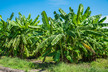
Tanzania has nearly 670,000 hectares under banana production, according to FAO data, making it the second largest producer in Eastern Africa. Highland cooking bananas, including Matooke and Mchare, are staple foods in regions such as Kagera, Mbeya, and Kilimanjaro. Yields are estimated at about 10 per cent of potential due to pests, diseases, and inadequate cultural practices. IITA has invested in banana research in Tanzania since 2014.
 © IITA
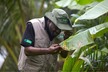
IITA Banana Breeder, Professor Rony Swennen, with the NM-AIST Vice Chancellor, Professor Maulilio Kipanyula
Since the initial Memorandum of Understanding in 2014, NM-AIST has hosted IITA's highland cooking banana breeding programme, the first banana breeding programme in Tanzania. The programme focuses on developing improved, high-yielding varieties of East African highland cooking banana and Mchare.
At the NM-AIST campus, IITA's breeding activities are supported by office space, laboratories, and trial fields. Facilities include tissue culture, molecular, and pathology laboratories, along with 12 hectares of irrigated research fields.
Low yields linked to pests and diseases are being addressed through breeding, awareness campaigns, eradication of banana bunchy top virus-infected plants, and improved agronomy. IITA's breeding work builds on banana and plantain breeding activities initiated in Nigeria in the late 1980s.
In collaboration with the Tanzania Agriculture Research Institute, four high-yielding Matooke hybrids developed jointly by the National Agriculture Research Organization in Uganda and IITA have been released. Researchers also developed the first Mchare hybrid, T.2070-1, which is high-yielding and resistant to Fusarium wilt. The variety is currently under multi-location and on-farm trials and is expected to be released soon.
A recent study in the Kagera region indicated that improved varieties have enabled farmers to produce an additional 120,000 tons of bananas per year, generating US$7 million annually.
Scientific staff from both institutions work jointly at the NM-AIST campus, and MSc and PhD students research banana-related topics. Research has included increasing seed set in Mchare and developing screening methods for resistance to nematodes. The extended collaboration will broaden research disciplines and expand activities across the country.
 For more information:
IITA
Tel: +234 7008 004482
Email: [email protected]
www.iita.org