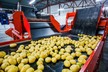
Malaysia is expanding onion cultivation with support from government agencies, aiming to reduce import dependency by up to 30 per cent by 2030. The initiative is positioned within the country's food security framework.
According to the Deputy Secretary-General (Development) of the Ministry of Agriculture and Food Security, Datuk Luqman Ahmad, Malaysia currently imports almost 100 per cent of its onion supply, with an annual value exceeding RM1 billion (US$210 million). The country also remains dependent on imports for corn and meat products, prompting a phased approach to strengthen domestic production.
"Today I went to the field to witness the government's initiative to introduce onion crops that have high potential. All this time we have been completely dependent on imports, so this step has a big impact in terms of reducing the value of imports and increasing food security," he said.
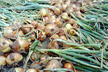
Onions have a production cycle of around two months. Based on a pilot project, a 0.32-hectare farm can generate nearly RM35,000 (US$7,350) per harvest season.
"If within two months farmers can earn between RM30,000 to RM35,000, this is a very productive crop. It not only helps the government reduce imports, but also provides a more guaranteed source of income for farmers," Luqman said.
Commercial plantings are underway in Pahang and Sabah, where approximately 8 hectares have been established in the initial phase. Further expansion will depend on land suitability and seed availability.
Output from a pilot project in Kelantan will be allocated for seed multiplication and distribution to other growers. Research support and technology transfer are being coordinated by MARDI, while the Department of Agriculture and Farmers' Organisations are responsible for field-level implementation.
The programme is intended to scale onion production capacity and reduce exposure to external supply disruptions within Malaysia's agro-food sector.
Source: The Malaysian Reserve