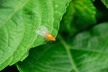
U.S. Senators Gary Peters, Susan Collins, Jon Ossoff, and Jeff Merkley have reintroduced bipartisan legislation aimed at addressing the spread of spotted wing drosophila, an invasive pest affecting fruit production across multiple states. The Spotted Wing Abatement Trust Act would support U.S. Department of Agriculture efforts to reduce the spread of the insect and expand related research.
"I've heard from Michigan growers about how these invasive insects continue to damage their blueberries, cherries, and other fruits – and pose a serious threat to their livelihoods and businesses," said Senator Peters. "I'm reintroducing this much-needed, bipartisan bill to help keep down costs for fruit growers, mitigate the spread of this invasive pest, and prevent their crops from being spoiled in the first place."
"Maine's wild blueberries are an integral part of our state's heritage and play a major role in our state's economy," said Senator Collins. "The pervasiveness of the spotted wing drosophila has threatened the livelihoods of fruit farmers in Maine and across the country. If left unchecked, it could have serious repercussions for our state's wild blueberry industry. Our bipartisan legislation would mitigate the rapid spread of this invasive pest and help prevent fruit crops from being spoiled by this infestation."
"Georgia growers have long dealt with the threat of infestation," said Senator Ossoff. "We are introducing this bipartisan legislation to help ensure Georgia growers have the resources to fight this pest and protect their crops."
"Agriculture is deeply ingrained into Oregon's economy, and Oregon's small fruit and tree fruit crop growers need all the help they can get in combating invasive pests—such as the spotted wing drosophila," said Senator Merkley. "Our bipartisan bill would help ensure researchers have the resources and funding needed to develop efficient ways to get rid of these pests without costing our growers extra money and time."
The proposed SWAT Act would establish a fund managed by USDA's Animal and Plant Health Inspection Service. The legislation authorizes US$6.5 million annually over five years to support research and mitigation efforts.
Spotted wing drosophila is native to East Asia and lays eggs in soft-skinned fruit, including cherries, blueberries, raspberries, blackberries, and strawberries. Since its first detection in the continental United States in 2008, the pest has spread across the West Coast and into Florida, Georgia, Utah, the Carolinas, Wisconsin, and Michigan.
Estimated national economic losses associated with the insect exceed US$700 million annually. Because fruit buyers operate under zero tolerance policies, entire shipments may be rejected if a single larva is detected. Growers rely on pest management programmes to maintain compliance, which increases production costs.
For more information:
Jeff Merkley
Tel: +1 202 224 3753
www.merkley.senate.gov