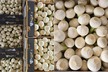
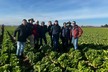
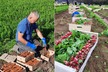
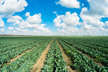
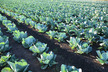
On the outskirts of Knezha, a cabbage field is set to remain unharvested, with large volumes expected to be ploughed under. Instead of supplying the domestic market, the producer has decided not to harvest, citing purchase prices that do not cover costs.
Plamen Tafradzhiyski, a 35-year-old grower active in family farming since 2007, says the current market situation has pushed his operation into negative margins. Around 24 acres, equivalent to about 9.7 hectares, of cabbage remain under snow after he chose not to sell the crop through intermediaries.
"The large chains and exchanges give 20 stotinki without VAT, or 24 stotinki with VAT. After paying the workers' wages and the depreciation of the equipment, everything comes out at a loss. Only the exchanges and resellers profit", explains Plamen. At current exchange rates, this corresponds to roughly US$0.11 per kilogram excluding VAT and about US$0.14 including VAT.
With no viable sales options, the grower attempted to reduce losses by offering the cabbage free of charge to anyone willing to harvest it themselves. This, however, did not change the outcome.
"At least 50 tons remained in the field. No one wants to come and pick it up – not even for animals or for personal consumption- and the cabbage is useless. Despite the announcement that it was free, people took a maximum of 500 kilograms," says Plamen. Asked about the discarded work and inputs, he indicates there are no alternatives under the current conditions.
Those interested in collecting cabbage have only one more week before the crop is mechanically destroyed. After that, the field will be worked with machinery to incorporate the biomass into the soil.
"It goes for 'green fertilization', although this is quite expensive fertilization. We get by with the plow and the disk harrow, and that's it. Next year we will plant only two or three acres, just enough to make ends meet, and then we will switch to other crops," the grower says. Two to three acres correspond to around 0.8 to 1.2 hectares.
The situation highlights the pressure on open-field vegetable growers when market prices fall below production costs, even when output volume and field quality are not the limiting factors.
Source: akmu