Controlled vertical farms are offering India's strawberry market a way to secure year-round premium supply despite tropical hurdles, says Harish Varadharajan, co-founder of Fragaria Fruits. "India falls short with the lack of domestic supply of high-quality agricultural produce, despite the cost advantages of producing here. So we took a stance and chose a difficult crop in a difficult climate. We piloted our thoughts, and within 1 year, we were able to successfully grow strawberries right here in Chennai."
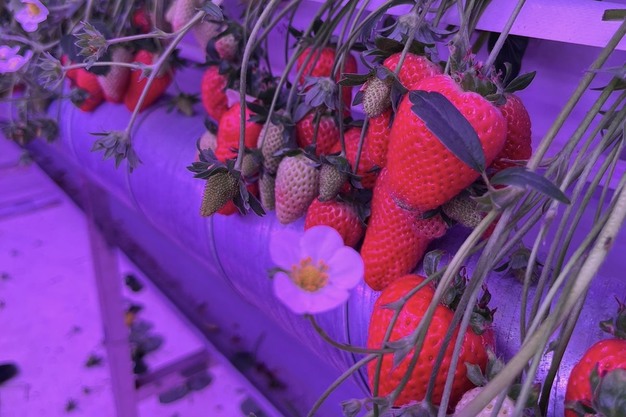
At Fragaria's pilot operations in Chennai, 720 plants are stacked across four vertical levels in full climate control, diverging from India's typical open-field or tunnel methods. The operation has tested nine varieties so far. Timothy Chad Van Niekerk, co-founder of Fragaria Fruits, rates Fandango highest for flavor, Sweet Sensation for top yields and berry size, and Limore for reliable performance across cycles. Bangalore's upcoming 20,000-plant farm will incorporate 2 to 3 additional varieties to confirm choices before full commercial roll-out, Timothy shares. "Before moving into full-scale commercial production in Bangalore, we plan to trial 2 to 3 additional varieties to further validate performance," he adds.
 © Fragaria Fruits
According to Harish, India's strawberry market stands at USD 1 billion yearly, with the potential to reach USD 10 to 15 billion. "Consumption among India's affluent consumers averages just 0.25 kg per person in comparison to China's 2 to 3 kg per person, across all income segments. Therefore, we aim to make a year-round, high-quality supply of premium strawberries more available, expanding overall consumption." Harish highlights the cost advantages that fully controlled setups offer: "In India, given the difficulty of importing off-season strawberries and relatively lower electricity costs, we strongly believe that fully controlled-environment farming is the most effective model for producing premium strawberries at scale."
Fragaria is experimenting with 3 to 5 flushes from June-bearing varieties, in contrast with the everbearer trend. "Globally, everbearing varieties are increasingly popular. However, because we have the ability to control production year-round, we are experimenting with multiple fruiting cycles from June-bearing varieties. Our early results indicate that, when managed correctly, the total cumulative yield from June bearers across the full cycle can exceed that of everbearers," Damian Lopez Salazar, co-founder of Fragaria Fruits, explains.
 © Fragaria Fruits
Major challenges include scarce skilled talent for high-tech farming in India, limited access to quality pollinating bumblebees, regulatory hurdles for elite planting material imports, and inputs designed for fields rather than controlled setups. "These factors collectively increase the learning curve for advanced strawberry production," Harish notes.
Looking ahead, Fragaria will trial top everbearing varieties against its tested June-bearers and secure breeder licenses for tissue culture propagation. "We are always looking to collaborate with experienced, high-quality growers from around the world. If you're interested in being part of a challenging and exciting strawberry-growing journey in India, we would love to connect," Harish concludes.
For more information:
Harish Varadharajan
Fragaria Fruits
Tel: +91 97 89 911 140
Email: [email protected]
www.thefragaria.com