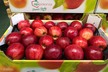
Israel and the United States have signed a new agricultural trade agreement that will remove import duties on a wide range of U.S. fruit and vegetable products from 1 January 2026. The move forms part of ongoing negotiations aimed at easing U.S. tariffs on Israeli exports introduced earlier this year. The list of agricultural products that will continue to receive tariff protection in Israel includes apples, pears, persimmons, almonds, potatoes, tomatoes, peanuts, hummus, processed corn, and frozen vegetables.
Under the agreement, Israel will grant tariff exemptions on about 300 U.S. agricultural items. Tariff reductions for most products will take effect immediately, while others will be phased in over the next decade. To protect local growers, Israel classified 27 products as sensitive, including apples and pears, which will remain subject to quotas until 2035. These quotas will gradually expand by around 2% per year before tariffs reach zero in the final stage of the transition.
Israel also agreed to subsidize US wheat imports, though grain products fall outside the fruit and vegetable sector. Officials stated that the government intends to open the market to greater competition while maintaining production capacity in key crops.
Deputy trade commissioner Yifat Alon Perel said that "most of the agricultural imports from the U.S. are already duty-free in Israel. Less than 1% of U.S. imports to Israel aren't currently under 0% tariffs," noting that changes for fresh produce categories will be limited. She added that the agreement is expected to support consumers while creating a framework for future export negotiations.
The agricultural pact replaces a temporary arrangement from 2004 and establishes a more permanent structure for bilateral trade. Parallel discussions are underway to reduce the current 15% U.S. tariff applied to most Israeli export goods. According to Perel, Israel sees the agriculture deal as a step toward broader tariff adjustments, although an immediate return to zero-duty access is described as unlikely.
Industry groups responded with mixed views. Some welcomed expanded access to the U.S. market, while others raised concerns about competitive pressure on domestic growers. "Any move to open markets needs to be accompanied by a national responsibility plan for Israeli industry and food security," said Lior Levy of the Food Industries Association.
The Economy Ministry said it is working with the Agriculture Ministry and the Prime Minister's Office on a national support programme for the sector, including investment in new technologies and artificial intelligence to improve production efficiency.
Source: The Times of Israel