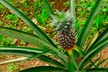
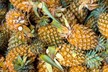
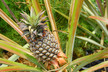
Embrapa Cassava and Fruit Crops in Bahia will present two new pineapple cultivars, BRS Sol Bahia and BRS Diamante, to growers and technicians in the Itaberaba region on December 3. Both varieties are resistant to fusarium wilt, the main disease affecting pineapple production in Brazil. Fusarium wilt, caused by Fusarium guttiforme, affects an average of 20% of plants and can lead to the total loss of a production area. The genetic resistance of the new materials reduces the need for chemical control and prevents losses linked to diseased planting material and unmarketable fruit.
According to researcher Davi Junghans, "our materials possess a set of characteristics that make them superior products, the main one being resistance to fusarium wilt. And it's total resistance, different from tolerance." Junghans noted that productivity for the new cultivars is around 56 tons per hectare, compared with the national average of about 26 tons per hectare in 2024, based on IBGE data. He added that yield gains relate to the reduced fusarium impact compared with the widely used Pérola variety.
The event is organized with the Municipality of Itaberaba and supported by the Pineapple Collaborative Network, Coopaita, and Fazenda Nova Cana Fita. Activities begin at 8:00 AM with tasting and sensory analysis led by researcher Eliseth Viana, followed by an opening session at 9:00 AM including the launch of the Pineapple Collaborative Network. Presenters include researchers from Embrapa Cassava and Fruit Crops and representatives from local institutions.
Technical lectures will cover the variety development process, validation work, and cultivation and post-harvest practices. Additional information on access to planting material and nursery propagation will be provided by researchers from Embrapa Fisheries and Aquaculture and Embrapa Cassava and Fruit Crops.
Itaberaba, located 264 kilometers from Salvador at the entrance to Chapada Diamantina, is a major production area for the Pérola variety. IBGE reports that in 2024, growers harvested 21.7 million fruits from 1,110 hectares. Production is concentrated on small farms of less than three hectares, relying largely on family labor and generally without financing.
The BRS Sol Bahia and BRS Diamante varieties were officially launched on November 12 in Frutal. On the same day, a public hearing in Brasília discussed Bill No. 2,533/2025, which could grant Itaberaba the title of National Pineapple Capital.
Source: Embrapa / Abrafrutas