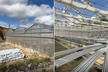
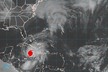
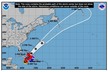
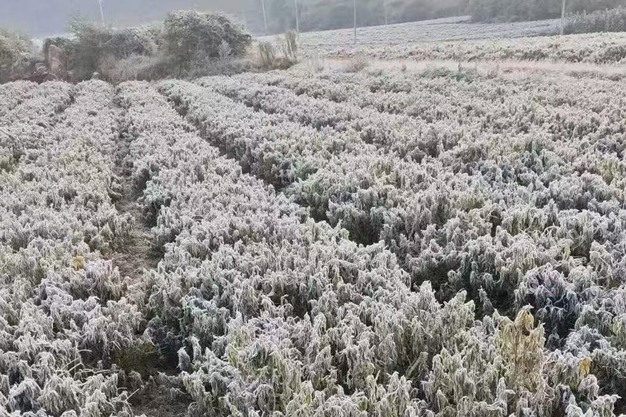
Yunnan is a key agricultural province in China, particularly renowned for its fresh-cut flowers and blueberries. Blueberries typically begin coming to market in November. This year, however, Yunnan has experienced exceptionally abundant rainfall, with the rainy season lasting longer than usual, posing significant challenges for blueberry cultivation and management. As December approached, an early and severe frost hit the region. Starting from November 26, multiple areas in Yunnan issued frost disaster warnings. Major blueberry-producing regions such as Jianshui, Honghe, Chengjiang, and Qujing suffered extensive frost damage, with open-field blueberries being particularly affected.
 © Luo (Cathy) Rong | FreshPlaza.com
On the night of November 27, temperatures dropped to as low as -2.2°C, and sub-zero temperatures were recorded even inside greenhouses. This posed a severe threat to blueberries during their critical flowering and fruiting stage. Many small and medium-sized growers, lacking adequate protective facilities, suffered especially heavy losses. Some farmers attempted to raise temperatures by using heating blocks or creating smoke, but these measures proved insufficient against such intense frost.
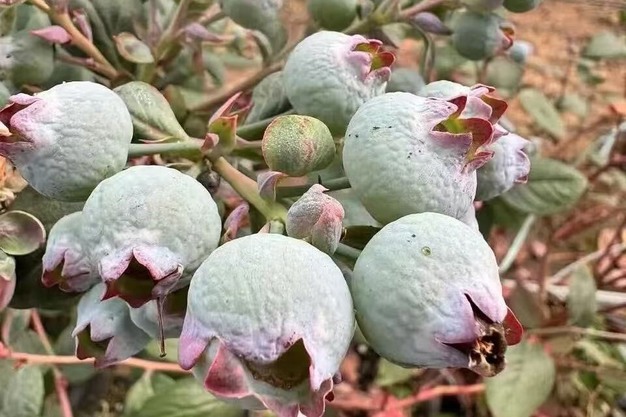 © Luo (Cathy) Rong | FreshPlaza.com
The fresh-cut flower industry was also impacted. During winter, the growth of fresh-cut flowers naturally slows, extending their production cycle and reducing overall market supply. The severe frost further exacerbated the situation, causing issues such as broken stems and damaged shoots for many growers, leading to a further decline in output. Consequently, prices have risen sharply, with some varieties of roses increasing by around RMB 20 per bundle.
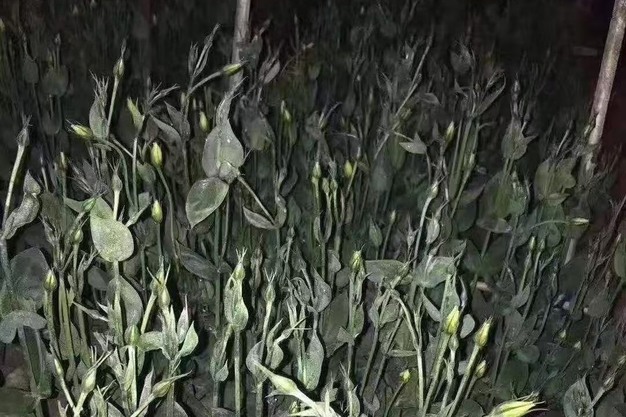 © Luo (Cathy) Rong | FreshPlaza.com
Benefiting from its exceptional climatic advantages, Yunnan has long been a major agricultural province in China, with open-field farming operated predominantly by smallholders accounting for the majority of production. However, in the face of increasingly unpredictable weather patterns, the need for protected horticulture has become particularly necessary.