As December begins, supply chains enter the final phase of the peak season with varying conditions across ocean, inland, warehousing, and parcel networks. Ocean capacity remains available on major trades, while routing through the Red Sea continues to be assessed. Inland systems face railcar shortages, driver constraints, and tightening trucking fundamentals. Warehousing strategies are shifting toward flexibility, and parcel networks are operating through the final weeks before Christmas and the January returns surge.
Ocean operations remain stable on Europe–North America routes, with space available through December on multiple services. Shipments from the Mediterranean and to Canada face limitations due to low winter water levels. Demand from India is rising as markets anticipate a tariff agreement, and a Peak Season Surcharge to the U.S. East Coast and Gulf will apply from December 21. West Africa cocoa and South Africa fruit volumes are active, with available capacity on dedicated services. On Asia–North America lanes, rates briefly spiked after China's Golden Week but have since eased. Capacity is expected to tighten approaching the Chinese New Year on January 29.
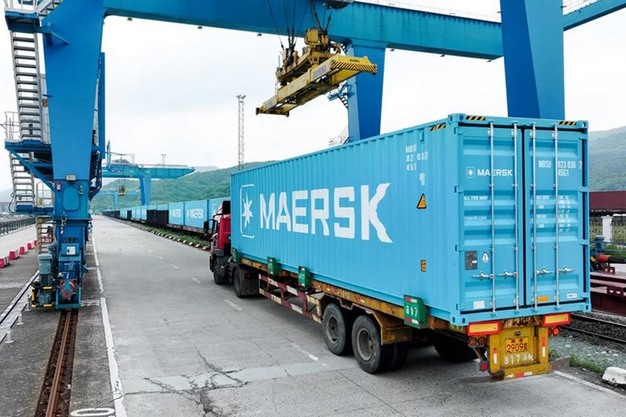 © Maersk
Less than Container Load demand into North America remains strong as importers shift from airfreight to ocean due to costs and tariff pressure. LCL volumes on Asia–North America lanes are projected to peak in early 2026.
Customs enforcement has increased across steel, aluminum, and low-value parcel imports. New tariffs were implemented in November on selected imports from India, Vietnam, and Turkey, with additional U.S.–EU alignment measures finalised. Investigations into China-origin goods routed through Southeast Asia have expanded, and Mexico introduced high tariffs on some sugar imports while preparing broader customs reforms for 2026.
Inland networks show contrasting conditions. On the U.S. West Coast, port fluidity remains steady, but driver availability is tightening due to new licensing rules. Carrier revocations continue, reducing trucking capacity even as rates remain stable. Canadian inland cargo faces delays of one to two weeks as railcar shortages and high volumes slow movements through major ports. Low water levels on the St. Lawrence River and labour variability in Montreal are adding to schedule challenges.
Warehousing availability in the U.S. has reached its highest vacancy rate in more than a decade as companies consolidate after pandemic-era expansion. Many are shifting toward flexible models supported by automation, shared capacity, and outsourced operations.
In ground freight, U.S. demand remains uneven, but capacity risks are rising. Load-to-truck ratios have increased, and carriers continue to exit the market. Canadian trucking demand has softened after November's peak, though freeze-protection requirements may tighten capacity. Parcel networks are managing the peak season with rising holiday volumes and preparing for the January returns surge.
 For more information:
Maersk
Tel: +1 800 321 8807
Email: [email protected]
www.maersk.com