Growers handling multiple crops are being advised of updated interstate trade requirements following the detection of Tomato potato psyllid (TPP) in Victoria. The pest was first found in the state in November 2024 and detected again in October 2025. As a result, Victoria's TPP-free status will be revoked on 8 December 2025.
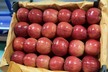
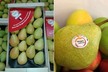
According to information published by Agriculture Victoria, changes will apply to the interstate movement of TPP host produce and nursery stock. Apples and pears are not considered TPP hosts, but they fall under the current definition of a TPP carrier as "fruit with green material".
Apples and pears from Victoria remain exempt from restrictions when sent to New South Wales, South Australia, Western Australia, and the Northern Territory. However, at present, Victorian growers sending fruit to Queensland or Tasmania will need to follow new conditions.
For Queensland, an inspection requirement is expected, and a standard is being prepared.
For Tasmania, a phytosanitary fumigation schedule will be required. The existing ICA-04 fumigation schedule is expected to meet these needs, pending confirmation.
Industry bodies are seeking clarification on the carrier definition and are requesting that apples and pears be formally listed as exempt for movement into Queensland and Tasmania.
In the interim, growers and packing operations are encouraged to apply for ICA-61 accreditation to maintain market access. Applications must be submitted by email to [email protected]
Accreditation processing is expected to take around five working days for completed applications.
Once processed, businesses will receive access to the required online training modules. These modules, which include assessments, replace an initial face-to-face audit. A Certificate of Accreditation will be issued upon successful completion.
Further updates will be provided when Queensland and Tasmania finalise their requirements.
 © APALFor more information:
Ian Cover
APAL
Tel: +61 422 623 438
Email: [email protected]
www.apal.org.au