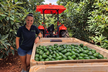
Australians are set to enjoy as much as 75,000 tonnes of mangoes this summer, indulging in a fruit whose modern Australian story began in the North Queensland town of Bowen. Although mangoes are mainly grown in the Northern Territory today, Bowen is credited with producing the nation's first commercial varieties. Local lore holds that harbour traders from India and Southeast Asia gifted seeds to Bowen's harbour-master in the 1880s. Through crossbreeding and selective cultivation, farmer Harry Lott eventually produced what became the Kensington Pride—still Australia's most beloved mango, celebrated for its uniquely sweet, tangy flavour. Researchers say its distinctive taste comes from alpha-terpinolene, a compound not found in such concentrations in mangoes elsewhere in the world.
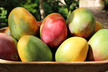
As demand grew and shortcomings of the Kensington Pride emerged, breeders developed new varieties. The R2E2, created through a cross between Kent and Kensington Pride, impressed researchers with its larger size, clean flesh, and impressive shelf life before its official release in the 1990s. Today it dominates export markets. More recent additions include the Calypso, admired for its delicate sweetness and pink-blushed skin, and the Honey Gold, prized for its rich golden colour and smooth, premium-quality flesh. Together, these varieties reflect decades of innovation rooted in Bowen's early mango heritage.
Source: www.abc.net.au