The Department of Agriculture Extension has set a winter-season production target of 19.75 lakh tons of vegetables across 82,525 hectares in all eight districts of Bangladesh's Rajshahi division. Officials report that 9.62 lakh tons are planned from 39,695 hectares in the Rajshahi Agricultural Zone and 10.13 lakh tons from 42,830 hectares in the Bogra Zone.
According to Dr Azizur Rahman, additional director of the Department of Agriculture Extension, the plan focuses on expanding winter vegetable output through the use of available natural resources and modern cultivation methods.
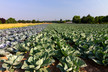
Local markets are currently supplied with early-season vegetables such as cauliflower, cabbage, bottle gourd, Indian spinach, and red amaranth. Growers and consumers are benefiting from the increased availability of these crops.
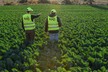
Producers across the division report stable yields and steady market demand. In Godagari upazila, grower Anwar Hossain has planted cabbage on four bighas, papaya on one bigha, and brinjal on three bighas. He said he has been selling cabbage at Taka 20 to 25 per piece (US$0.14 to US$0.18) and brinjal at Taka 40 to 50 per kilogram (US$0.36 to US$0.45).
In Paba upazila, Monirul Islam earned Taka 30,000 (US$272) from one bigha of red amaranth after sowing seed 25 days earlier at a cost of Taka 8,000 (US$72). He noted the short crop cycle and consistent local demand.
Producers report expanding their production area as vegetable cultivation becomes a preferred option in parts of the Barind Tract. Grower Ali Hossain from Godagari upazila said his annual earnings from vegetables are now around Taka four to five lakh (US$3,630 to US$4,540). He began with brinjal on five decimals after water availability limited his Irri-boro rice season. His initial income of Taka 15,000 (US$136) encouraged him to shift to vegetables on a larger scale.
Farmers in the Barind area are increasingly moving from high-irrigation crops to vegetables, supported by shorter crop cycles and access to regional markets. According to sub-assistant agriculture officer Atanu Sarker, vegetable supply from the Barind area is now regular, with growers sending produce to cities including Dhaka after meeting local demand.
Officials indicate that both acreage and production in the region have increased over recent years, and vegetable cultivation continues to expand across both commercial and non-commercial farms within the division.
Source: BSS News