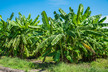
South Africa's banana supply is dominated by imports from Mozambique, where production costs are lower because of wage differences. In Mozambique, the minimum wage for farmworkers is R1 792/month (US$98/month), compared with R4 836.72/month (US$266/month) for South African farmworkers, based on 21 eight-hour days per month.
According to Blaine Peckham, chairperson of the Southern KwaZulu-Natal Banana Association, the wage bill remains a major cost component for producers. "This gives Mozambican farmers an advantage over South African farmers," he said. Industry role players estimate that Mozambican bananas account for about 60% of volumes sold on South African markets.
Jan Lourens, a banana grower in the Onderberg region of Mpumalanga, said the local industry could not be left exposed purely based on free-market conditions. "There are thousands of jobs at stake if the South African industry is decimated."
Employment data for the sector has not been updated since 2011, when the Department of Agriculture recorded 27,033 direct jobs, supporting about 108,131 people.
A producer speaking anonymously said farmers earn about R165 (US$9) per 17.5 kg box over a 12-month cycle. "This translates to R9.42/kg. So, the farmer gets about 52% of the price consumers pay for 10 to 14 months of work, which is the time it takes to produce bananas. The retailer, who takes around four days to sell the bananas, receives 48% of the price [R18/kg]. Farmers take all the risk to produce the bananas but aren't rewarded fairly," he said.
Concerns have also been raised about phytosanitary risks linked to unregulated Mozambican imports. Suné Wiltshire, general manager of the Du Roi banana laboratory, noted that South Africa has fusarium wilt but not the TR4 strain present in northern Mozambique. Lourens warned that the entry of TR4 would have a severe impact on South African production. "We need assistance from the government to ensure phytosanitary protocols are in place to prevent the disease from entering South Africa. Unchecked imports are a big threat, and we are pleading with the government to protect the local industry."
Producers also point to the effect of high import volumes from Mozambique and Eswatini on municipal market capacity during peak season. Limited cooling space forces growers to accept lower prices to avoid losses.
Farmers report additional market pressure linked to buyer behaviour. A market source said a "Nigerian mafia" influences prices on the Mandela People's Market in Johannesburg. He said buyers hold out until prices fall, forcing growers to accept lower returns because bananas cannot be stored for long periods.
Wiltshire said banana plantings continue to fluctuate with prices. "One year, orders for plants go up, and the next they drop. Bananas take 10 to 14 months to produce fruit, so it's a short cycle that can be easily started and stopped."
Source: Farmer's Weekly