The European Parliament's agriculture committee will question European Commission officials this week regarding the Commission's plan to amend the EU–Morocco Association Agreement, including changes affecting the status of Western Sahara. The discussion follows objections from several MEPs and the possibility of a legal challenge.
The Commission's amendment comes after a UN Security Council resolution that endorsed Morocco's autonomy plan for Western Sahara. The resolution did not determine the territory's final status. Morocco has controlled Western Sahara since 1975, while the Polisario Front seeks independence. The territory remains listed by the UN as non-self-governing.
Several governments, including the United States, Spain, France, and the United Kingdom, have moved closer to Morocco's autonomy proposal due to geopolitical considerations. Morocco is viewed as a partner on energy, migration, and security, and as a strategic link between Europe and Africa.
In October, the Commission advanced an amendment extending preferential tariffs to Western Sahara under Morocco's trade framework. It also introduced a new "region of origin" label, allowing products to be marketed using Moroccan regional names rather than "Western Sahara". The Commission stated the changes were needed to address a 2024 EU Court of Justice ruling that annulled previous agreements because they lacked consent from the people of Western Sahara.
According to parliamentary sources, the European Parliament's legal service has been asked to assess whether the changes comply with court requirements. NGOs and producer groups are also considering legal action, arguing that applying the agreement to Western Sahara through new labelling rules does not meet the court's standards and may mislead consumers.
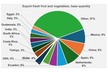
Melons and tomatoes are the primary crops grown in Western Sahara. European growers, particularly in Spain and France, have previously raised concerns about Morocco's expanding fruit and vegetable exports into the EU market.
Hugh Lovatt of the European Council on Foreign Relations said the UN resolution marks a shift in political support but does not alter Western Sahara's legal status. He said it cannot be taken "as recognition of Moroccan sovereignty over Western Sahara" and that the territory remains in a decolonisation process. He added that only two developments could change the EU court's view: a UN Security Council recognition of Moroccan sovereignty or the removal of Western Sahara from the UN list of non-self-governing territories.
Lovatt said the Commission is taking a "transactional and ideological" approach, aiming to sustain relations with Morocco. He warned that the "region of origin" category could set an inconsistent precedent compared with other occupied territories.
The Commission stated that it supports a UN-led political process "based on Morocco's autonomy proposal" and that this does not affect individual EU member-state positions. The EU is also preparing a Strategic Partnership with Morocco, with discussions ongoing.
Source: EURACTIV