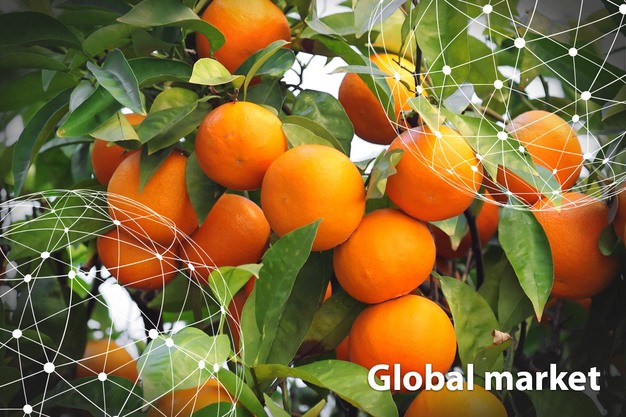
Global mandarin and clementine markets are moving through mixed conditions this season, with countries reporting challenges linked to weather, shifting demand patterns, market competition, and changing trade dynamics. Italian clementine production is stable but facing climatic challenges that have reduced yields in some regions.
Spain is managing later ripening and overlap with Southern Hemisphere supply, pressuring early varieties. The Netherlands reports improving demand after a slow period. Greece is progressing with steady volumes and good quality despite drought-affected areas. The German citrus market is currently dominated by Spanish clementine and satsuma shipments, with steady demand supported by cooler autumn weather. France reports a firm start to the clementine season, with strong early demand driven by high-quality fruit from Spain, Italy, and Corsica.
 © Viola van den Hoven-Katsman | FreshPlaza.com
North America notes temporary harvest delays in California due to rain, but steady demand and good sizing. South Africa has completed a larger mandarin export season, navigating market shifts and oversupply. Egypt reports higher mandarin volumes this season, with larger sizes and a slow start influenced by continued weakness in the Russian market.
Morocco shows strong growth in Nadorcott production and exports, driven by expanded licensing to growers and improved rainfall. India is seeing early Chinese arrivals competing with South African fruit, with pricing shaped by quality and landed costs.
Italy: Stable clementine demand despite climatic challenges
According to ISMEA data, the total area dedicated to small citrus fruits in Italy will reach 36,100 hectares in 2025, with 26,968 hectares specifically planted with clementines. Clementines will account for approximately 81 per cent of the total harvest. Calabria produces two-thirds of all Italian clementines. Despite yearly fluctuations caused by weather conditions, Calabrian production has stabilised at around 450,000 tons over the last five years.
"This year, the clementine harvest in the Sibari Plain has dropped by between 15 and 20 per cent compared to last year due to abnormal spring weather that affected fruit set. Despite the lower supply, prices have remained stable at last year's levels," said the president of one of Calabria's leading producer organisations. The PO is currently halfway through the campaign between the early varieties and the Comune clementine, the latter being the most popular among consumers. The season is expected to continue until late December or early January, after which the late varieties will run until February.
"Two crucial challenges are emerging for the sector: the strategic need to invest in late varieties to compete with Spain, and the urgent need to educate consumers to recognise the intrinsic quality of the fruit beyond its external appearance, such as skin colour, which is increasingly influenced by abnormal temperatures." Two other Calabrian producers report that clementines are facing significant difficulties due to their very small size and delayed colouring, both caused by high temperatures in June, July, and November. "While production issues are linked to an increasingly extreme and unpredictable climate, the structural challenge for the supply chain remains the ability to work together, unite, and present a coordinated presence on the market."
A trader from Puglia adds: "There has been a radical change in consumer demands in countries such as Hungary, Poland, the Czech Republic, Latvia, and Ukraine. Poland, for example, has become extremely selective and now demands high-quality products. Unlike in the past, when smaller sizes and second-choice products were acceptable, current demand focuses on sizes 1 to 3. These higher expectations are linked to significant economic development and rising living standards in these markets."
YouGov data shows that the mandarin and clementine market in Italy has remained stable over the last two years. Cost-saving strategies adopted by consumers do not appear to have significantly changed purchasing behaviour in this category, which remains a household staple, especially during the winter months. Mandarins and clementines are purchased by 66 per cent of Italian households. Consumption peaks between November and January and remains significant until March. For organic products, however, the category does not show any particular growth trend.
Spain: Later ripening and Southern Hemisphere overlap squeeze early varieties
The start of the clementine and mandarin season has been slower, mainly due to biological factors that caused the fruit to ripen later, as well as an overlap with the end of the mandarin season in the Southern Hemisphere. Increasing volumes of easy-peeler mandarins are being imported from the Southern Hemisphere for longer periods, leading to early domestic varieties competing directly in the market.
Clementine production is lower this season, with the most significant drop expected in mid-season varieties such as Clemenules and Clemenvilla. However, a larger and better quality crop is anticipated for the second part of the season. The sector does not foresee any shortages, as second-season mandarin varieties are entering the market earlier, allowing exporters to maintain a continuous and stable supply.
Field purchase prices during the summer have been high, especially for varieties such as Oronules, Clemenules, and other extra early types. However, market response has been unfavourable for early varieties. Fruit ripened between 10 and 15 days later than expected, leading to an accumulation of supply. As a result, sales prices in many cases do not match the commitments made with growers. This is why a considerable volume of Oronules clementines remains unharvested while Clemenules, the next variety in the calendar, is already being marketed. To achieve the returns agreed with growers this summer, prices will need to increase. As oversupply gradually decreases, traders are confident that demand will help stabilise and raise price levels.
In some Mediterranean producing countries, production volumes may experience a temporary decline this year, but the market's long-term structural trend points to growth. This is due to new plantations coming into production, increasing supply each year. Therefore, while temporary opportunities for higher prices may arise, international competitive pressure remains strong.
According to a grower and trader, "in the current circumstances, it will be difficult for this season to be fully positive for all links in the chain. It is not impossible, but the challenges we are facing, such as pressure on prices, international competition, volume management, and product quality, will make it difficult for all links in the chain, including growers, marketers, and distributors, to achieve optimum results."
Netherlands: Demand improving after challenging sales period
"Citrus demand has been very quiet in recent weeks, completely in line with the overall market situation. Fortunately, interest is now starting to recover. We held back on sales because the market was so weak, but we are beginning to bring in a bit more volume," a Dutch importer says.
"We are currently selling Lorentina leaf mandarins at €12–13. This week, we are also starting with the first Moroccan clementines, and we will be receiving some Pitufo as well," the importer notes. He remains hopeful about a market rebound. "Recently, the weather has been very mild with high temperatures, and once it turns colder, consumers start buying citrus again."
Belgium: After early subpar Spanish varieties, good volumes now available
"The Spanish clementine season is now in full swing, but we usually continue with South African fruit first before the Spanish varieties take over. The taste can vary significantly by variety and by year, which makes it important to sell fruit that tastes good and not just looks appealing. Switching too quickly to Spanish clementines can result in suboptimal quality, while the South African varieties are often still at their best. And a consumer's first purchase often determines whether they will continue buying," says a Belgian trader.
"By now, however, we are fully into the Spanish season. Quality and taste are central in the market, and there is enough supply of good-sized fruit, so sellers don't have to settle for smaller or lower-quality pieces. Volumes are now readily available, and by selecting carefully, the market can consistently offer an attractive and tasty assortment, ensuring that customers remain satisfied and keep returning for fruit that they enjoy."
Greece: Stable start with good quality and steady volumes
The harvest of Greek mandarins is in full swing. The weather has been favourable so far, with a mild summer compared to previous years and a normal autumn. Fruit quality and sizes are good, and market demand is expected to be strong. Production volumes are similar to last year, although some exporters state that mandarin production is 15 per cent lower due to last year's oversupply, which still translates to a normal season. Some areas experienced drought and low water tables, resulting in high EC (saline) water. It remains difficult to predict the second half of the season, when non-European countries enter the market. Greek mandarins are mostly facing competition from countries outside the EU.
Germany: Spanish clementines lead market supply
Spanish deliveries dominated the clementine market, with Oronules, Clemenules, and Loretina as the main varieties available. Italian supply supplemented the assortment and sold in Frankfurt at €2 to €2.70 per kg, while Greek batches completed the range. Spanish shipments also led the satsuma market, followed by Turkish supply.
South African imports continued to dominate the mandarin segment, with additional volumes arriving from Peru, Chile, and Spain. Demand increased slightly with autumn weather, and available supply was sufficient to meet this rise. Sales progressed without disruption. Prices showed normal week-to-week fluctuations, with no major deviations.
France: High-quality clementines support a firm market
The clementine season is now in full swing. Current supply includes Spain, which is delivering fruit of very high quality this year, along with Italy and Corsica, which began their season a month ago with the early Caffin variety. The strong quality of this year's Caffin has supported good sales, reinforced by the established appeal of Corsican fruit on the French market.
This week also marks the start of the Fine de Corse variety, which is entering the market with very good quality. Slightly lower volumes this year mean marketers face less pressure, allowing prices to remain high while still considered reasonable. Demand is present, and with cold temperatures and favourable weather conditions, consumption is expected to increase further.
North America: Rain temporarily delays California clementine harvest
Harvesting is underway on a slightly smaller California clementine crop this year. "We started harvesting a couple of weeks ago, and the eating quality is probably the best I have seen in my 21 years here," says Al Bates, president of Sun Pacific Shippers. "It is a very strong start to the season."
Harvesting was done ahead of this week's rains in California to avoid supply gaps. "You cannot pick clementines when they are wet, or you end up with a lot of decay, so we worked ahead. Now we probably have a little more fruit in storage than usual for this time of year. I would rather do that than pick immediately after rain," Bates explains.
Overall, the transition from imported mandarins, mainly from Chile, to California production has gone smoothly. Some imports are expected to continue through the end of the month. "We did start harvesting a little earlier, so there were about two weeks of decent carryover of imported product competing with California supply," he says.
This week, ahead of the U.S. Thanksgiving holiday, is typically brisk for produce sales, including clementines. "This means we are finally moving away from imports and into California fruit," says Bates, adding that imported clementines are currently smaller in size.
California fruit shows good sizing, peaking between 24 and 28, and demand is steady. "Last year, there may have been more imports available for a longer period. This week we expect a very good week, and hopefully we will have enough volume to meet demand next week," Bates says.
Pricing is slightly lower than last year, partly due to competitive pressure within the state for market share.
Sun Pacific Shippers expects to have marketable clementines until about mid-January, after which the company will transition to Tangos and later to Murcotts. "That crop also appears to be of similar size and very marketable, and we anticipate good quality throughout," Bates says, noting that the season may start slightly earlier due to the early start for clementines. "I expect to begin Tangos in January. There is an opportunity to begin a bit earlier, but fruit colour will be the key factor."
South Africa: Mandarin export volumes rise while market shifts persist
The mandarin crop increased from 40 million 15kg cartons exported in 2023 to approximately 53.5 million cartons this season. Shipments have now concluded.
An oversupply developed in markets in the Middle and Far East, while the orange trade appeared more appealing, especially early in the campaign. The South African citrus crop was large enough for the minister of agriculture to publicly congratulate the industry, but oversupply still occurred for both mandarins and oranges.
The recently announced reversal on tariffs by the Trump administration, lifting the 30 per cent tariff on oranges, did not provide relief for Western Cape-only mandarins destined for major U.S. retail programs. The South African industry is not yet clear on why this distinction exists. New markets had to be found quickly for several mandarins. In the end, the introduction of tariffs reduced the United States' market share by only 1 per cent from the 6 per cent held in 2024, the final year of the Clinton-era AGOA free trade concession.
Russian trade increased slightly, with the country taking 11 per cent of South Africa's mandarins this year. Europe absorbed almost a third of the mandarin crop.
Some South African exporters say they reduced their exposure to Far Eastern markets, which in previous years had received a high volume. Even so, soft citrus shipments to Asia rose from last year's 6 per cent market share to 9 per cent this year.
Egypt: Larger crop meets cautious demand from Russia
The Egyptian mandarin campaign began in October with higher volumes than last year. Production in Egypt follows a weak-year/strong-year cycle, and expected volumes this season are considerably higher, with a trend toward larger sizes. Increased availability has resulted in lower prices than last season. However, the start of the campaign is slow. One exporter notes, "We are apprehensive about a repeat of the slowdown in the Russian market this season, as it is our main market for mandarins. Last season, prices were high, which significantly slowed exports to Russia, and we are seeing that slowdown in the market continue into the start of the current season."
In the 2024/2025 season, Egyptian mandarin exports totalled 245,764 tons, compared with 307,946 tons in the previous season. Russia imported 114,700 tons of this volume in 2024/2025, down from 136,023 tons in 2023/2024.
Morocco: Nadorcott expansion drives higher mandarin exports
Mandarin production and export volumes in Morocco increased last season following the licensing of the Nadorcott variety to more growers. According to the Moroccan Nadorcott growers association, 325,000 tons of Nadorcott were exported in the 2024/2025 season, a 43.81% increase compared with the previous season. The association reports that approximately 3,000 growers now cultivate the variety across four main regions. Improved rainfall has supported this expansion, and export growth is expected to continue into the upcoming season from January to May.
India: Early Chinese arrivals influence India's market
India is recording steady mandarin imports from both China and South Africa. Chinese mandarins, mainly sourced from Guangxi, Fujian, Jiangxi, and Sichuan, are entering the market earlier than usual. They are gaining favour for their high sweetness levels and appearance at retail, although their delicate peel requires careful handling and cold chain control. South African mandarins continue to maintain a strong market position with consistent quality and stable acceptance in premium retail channels.
Wholesale prices for South African mandarins in India are around 18 to 20 U.S. dollars per 10 kg carton, equivalent to approximately 16.74 to 18.60 euros. Chinese mandarins are priced more competitively, offering buyers a value option with stable volumes. A consumer shift from oranges to mandarins is also shaping sourcing decisions and citrus planning strategies. For importers, the focus remains on landed costs, quality consistency, and shelf life.
Demand for higher-grade mandarins is expected to remain steady or increase slightly. Prices will continue to be influenced by weather conditions or logistical constraints. China, South Africa, and Australia remain the key supplying origins for the evolving Indian mandarin market.
Next Topic: Garlic