Sauerkraut has a long tradition, especially in southern and eastern Germany. And despite fierce competition from numerous new products, this pickled vegetable is still an integral part of German cuisine today, according to Hans-Peter Rödel, managing director of the sauerkraut factory of the same name in Trogen, Upper Franconia. The long-established company is celebrating its 50th anniversary in November this year and is one of the few medium-sized sauerkraut producers in the country that can hold its own against the large canning factories today.
The company was founded in its current form in 1975, when Herbert Rödel took over the business activities of the predecessor company Krantz in Hof. Two years later, the entire sauerkraut factory was rebuilt in the neighboring town of Trogen, and his son Hans-Peter joined the young company as an apprentice. The next step in the company's expansion came in 1981 with the takeover of the Hof-based company Heinrichs Sauerkraut and its customer base. "The fall of the Berlin Wall in 1989 was also literally a turning point for us, opening up new markets in the neighboring 'new' federal states of Thuringia and Saxony," recalls Rödel.
 © Rödel GmbH
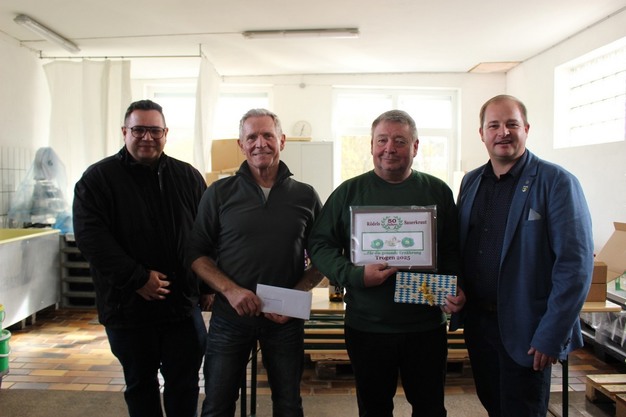
Brothers Siegfried (2nd from left) and Hans-Peter Rödel (2nd from right) are the second generation to run the successful family business
Another strategic decision was the expansion of the product range to include organic sauerkraut in cooperation with Dennree Naturkost GmbH in the mid-1990s. Since then, Rödel has been offering the popular pickled vegetable in both conventional and organic production, each in two varieties: 'natural with salt' and 'with spices'. In addition to the basic range, which is produced and marketed in large quantities throughout the year, seasonal items such as salted gherkins are also worth mentioning. Rödel: "Overall, salted gherkins may only represent 5% of our total sales, but the trend is slightly upward."
 © Rödel GmbH
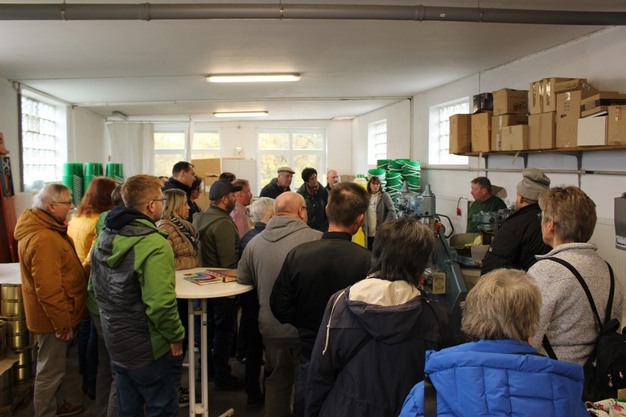
To mark the anniversary, an open house was held on November 1
Regional and supra-regional raw material procurement
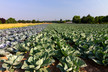
Today, several hundred tons of sauerkraut leave the family-run sauerkraut factory every year. At peak times, such as now in fall and winter, demand is, as usual, slightly higher than normal. The new season traditionally starts in July, when the old stored cabbage is replaced by produce from the new harvest. "We are safe this year and have already secured the necessary raw materials. We source most of the white cabbage we need from regular partners in the North German cabbage stronghold of Dithmarschen, but from August to November/December, we also temporarily source goods from regional partners in Lower Franconia. There has been sporadic rainfall in both growing regions, so the losses will be limited." Due to inflation, the prices of raw materials have been adjusted upwards accordingly. According to Rödel, most of the cost increases could be passed on.
Rödel's customers include food retailers, wholesalers, large consumers and industry, private retailers, and butchers. "The latter two sales channels in particular are weakening, while demand from food retailers continues to grow. We serve customers within a 150 km radius with our own fleet of vehicles, but a significant portion of our production volume is delivered via freight forwarders and intermediaries throughout Germany and, in some cases, to neighboring countries such as Switzerland, Austria, and Alsace."
 © Rödel GmbH
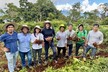
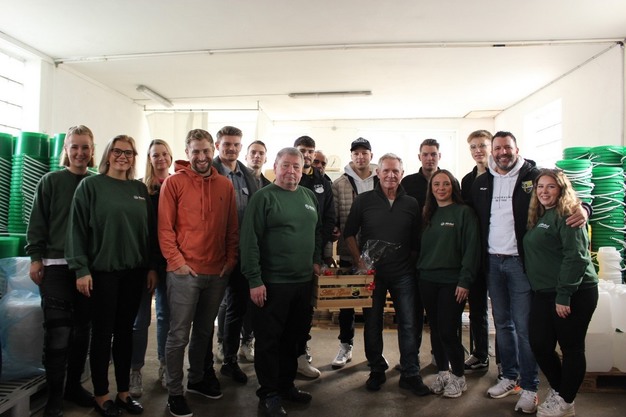
The team at the long-established company Rödel
Sauerkraut still trendy
Rödel is quite confident about the future of sauerkraut. "There have been extreme fluctuations in sales during the pandemic, but we are now back to a stable high level. We are seeing slight annual growth, especially in the organic sector, and we are also observing increasing demand for small portions of sauerkraut in the self-service sector. In everyday practice, this means that we are increasingly delivering 500 g bags and 1 kg buckets instead of the tried-and-tested barrels. Another emerging development is the trend toward ready-to-eat sauerkraut, i.e., pre-cooked in foil bags. This shows that sauerkraut continues to be very popular with the younger generation. This is because sauerkraut is in line with the current health trend and is relatively inexpensive compared to many other vegetable products."
For more information:
Hans-Peter Rödel
Rödel GmbH
Hauptstrasse 56
95183 Trogen
Tel: +49 / (0) 9281 / 7363-0
Fax +49 / (0) 9281 / 7363-11
Mail [email protected]
Web: www.roedel-sauerkraut.de