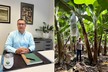
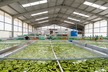
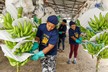
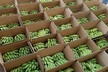
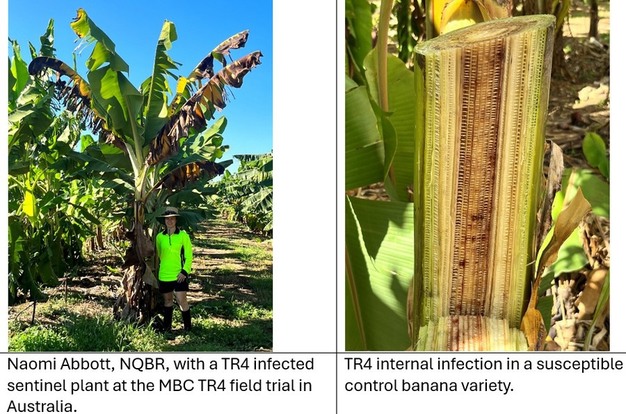
A banana breeding consortium has taken a significant step toward securing the future of one of the world's most consumed fruits, with several disease-resistant varieties now entering pre-commercial trials. Musa Breeding Company (MBC) has used conventional, non-GMO breeding methods to identify banana hybrids showing resistance to Fusarium Wilt Tropical Race 4 (TR4), one of the most destructive diseases affecting global banana production.
 © Australian Produce Partners
Bananas have been among the most widely available and stable fruits on supermarket shelves for more than a century, but TR4 has increasingly threatened their future. The disease originated in Asia and has severely affected production in major banana-growing countries, including China, Indonesia, Malaysia, the Philippines, India, Pakistan, and Vietnam. Over the past three decades, TR4 has continued spreading westward, reaching Colombia in 2019 and later being confirmed in Perú, Venezuela, and possibly Ecuador.
 © Australian Produce Partners
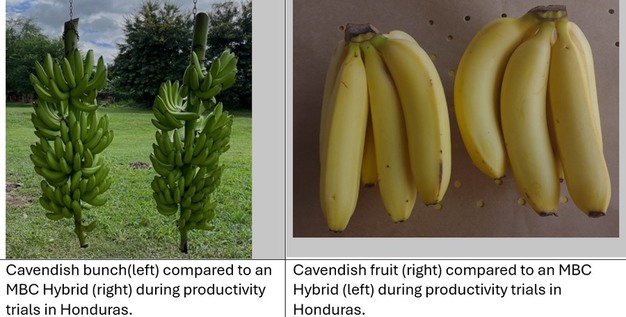
MBC, a consortium based in Honduras, has been conducting conventional breeding work to address TR4 since 2017. Its members include North Queensland Banana Research (NQBR), AgroAmerica, and Dole Food Company, working with the Honduran Research Foundation (FHIA), which has more than 50 years of experience developing non-GMO plantain and banana varieties. The goal is to produce a variety that resembles the Cavendish banana, which has dominated the market since the 1950s, but with improved resistance to TR4.
Over the past eight years, more than 15 million individual flowers have been pollinated using several sources of resistance. Thousands of plants have been evaluated. The selected hybrids are now undergoing trials to assess disease resistance, yield, taste, and overall quality. They will be made available once field evaluations are complete.
 © Australian Produce Partners
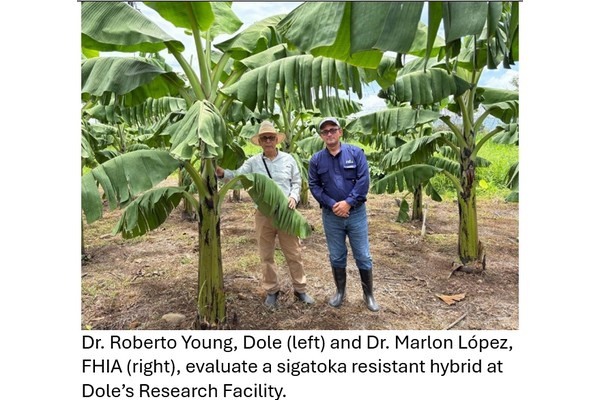
The breeding effort is beginning to produce results, with several hybrids in advanced development and others now in pre-commercial testing. Some of these hybrids show resistance not only to TR4 but also to black sigatoka or exhibit other traits of potential value for future production.
MBC states that the work aims to support long-term stability in global banana supply chains by providing growers with viable alternatives to current varieties that remain vulnerable to TR4.
 © Australian Produce PartnersFor more information:
Richard Clayton
Australian Produce Partners
Tel: +61 (0) 408 404 045
Email: [email protected]
www.ausproducepartners.com.au