Although the current Lithuanian fruit and vegetable market offers a fair combination of price and quality overall, it is still primarily price-oriented. "More and more consumers are willing to pay extra for higher-quality products such as ready-to-eat mangoes, avocados, and pineapples. The most interesting growth in product categories in Lithuania is still seen with mangoes and avocados. Mandarins are becoming increasingly popular throughout the year and are no longer just a Christmas product. However, there is a noticeable trend of declining demand for oranges, apples, and pears, and increasing demand for berries," affirms Elegijus Jankauskas, owner and CEO of Baltic Fresh Fruit.
 © Baltic Fresh Fruit
Jankauskas provides insight into the development of his company and its strategic approach to the fresh produce trade. "Baltic Fresh Fruit's history began with very close cooperation with growers. Initially, most of the company's partners were among the largest growers and exporters in Egypt. Together, we planned quantities, varieties, and seasonality. However, we soon realised that this was not enough and that we needed the entire infrastructure, including transportation, storage, ripening, quality control, and appropriate delivery methods, to ensure that the goods reached the customer in perfect condition. Without all of this, there is a very high risk of damage to the product. Therefore, we created the entire infrastructure so that we could manage all processes ourselves. Currently, our annual turnover is around €110 million."
The primary products distributed by Baltic Fresh Fruit to the Lithuanian and Baltic states market include citrus fruits, grapes, kiwifruits, cherries, bananas, pineapples (including those imported by air), avocados, and mangoes, as well as ready-to-eat (RTE) avocados and mangoes. "We import most of our fruit and vegetables from the following countries: Egypt, South Africa, Argentina, Peru, Chile, Israel, China, and Ecuador. We also have strong partnerships with suppliers in Greece, Turkey, and Uzbekistan. Although there are certain difficulties in delivering products to our customers in Kazakhstan and Uzbekistan, we are still able to fulfil their orders."
Baltic Fresh Fruit also values its strong sourcing relationships with Italy. "We maintain stable and strong relations with Italian producers and traders. The range of fruit and vegetables that we import from Italy changes with the seasons – in summer, we import watermelons, melons, citrus fruits, apples, and grapes; in winter, kiwifruit and berries. We also import a wide range of vegetables. The range of fruits and vegetables we import keeps growing every year. We highly value the diversity, freshness, and exceptional flavour of Italian fruit and vegetables, and thanks to fast and efficient transportation, we can ensure that the products reach our market quickly while maintaining their superior taste and quality all year round."
 © Baltic Fresh Fruit
Selecting suppliers and production partners from different countries is a meticulous process. "Before making a selection, Baltic Fresh Fruit conducts a survey to identify the most reliable and professional companies operating in different countries. Our primary goal is to establish long-term partnerships. Production must comply with OECD standards and European Union regulations on pesticide MRLs. The main certificates and quality standards that we adhere to at OECD are Global Gap CoC and BIO products certification."
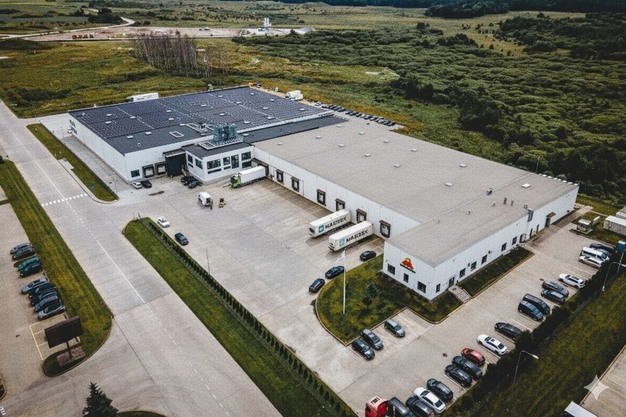
Maintaining the cold chain is essential, especially since transportation from foreign countries often takes more than a week. "Transportation from foreign countries takes more than a week, so a clear agreement has been made with shipping companies regarding maintaining the required temperature. We have our own transport, which picks up containers from the port of Klaipėda and delivers them to our warehouse, which is located 3 km from the port. Our warehouse has many separate storage facilities with temperatures ranging from -3 to +15 degrees, and higher if necessary. We also cooperate with many forwarding companies in major EU ports such as Rotterdam, Antwerp, Hamburg, Bremen, and Koper," explains Jankauskas.
Looking ahead, Jankauskas stresses that technological and managerial innovations must focus strategically on efficiency. "Technological and managerial innovations must focus on efficiency to prepare fresh produce for consumers and create a favourable environment for those working in this field, including growers, distributors, and consumers. The main factors we focus on are quality control, ripening, and packaging. We pay special attention to improving ripening technologies."
For more information: UAB "Baltic Fresh Fruit"
Stariškės g. 7, Laistų km., Dovilų sen.,
Klaipėdos r. sav., LT-95369
Tel.: +370 46 215572
Email: [email protected]
Web: www.bff.lt