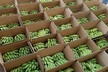
Amid rising competition in the European fruit and vegetable market, Cupalma, the Canary Islands' leading banana producer, and the Orsero Group, Europe's top fruit distributor and ripening company, through their Spanish subsidiary Hermanos Fernández, have announced plans to export PGI Plátano de Canarias certified bananas to Europe, starting with Italy.
With an annual revenue of over 95 million euros, Cupalma is the largest first-grade cooperative in the Canary Islands, with more than 1,800 associated growers and an annual production of about 40,000 tons. Orsero is the largest fruit and vegetable distributor in Southern Europe. Generating over 1,600 million euros annually and serving more than 10,000 active clients, it operates over 21 ripening platforms.
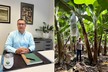
We spoke with Raúl Martín (RM), President of Cupalma, and Alessandro Canalella (AC), Sales Director of the Orsero Group and a member of the Board of Directors at Hermanos Fernández, about the sector's challenges, the sales strategy in mainland Spain, and their new export project to Italy.
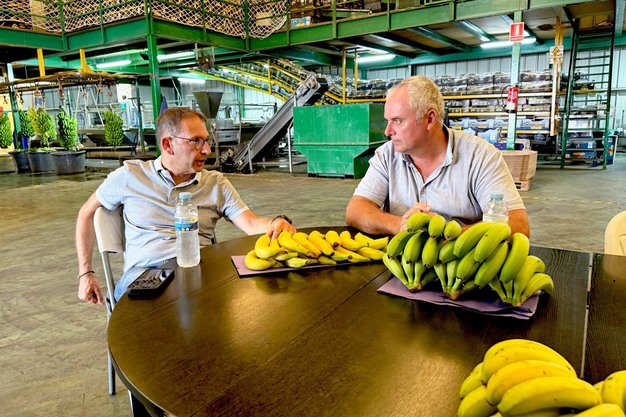 © Hermanos Fernandez
How did the collaboration between Cupalma and Orsero to export bananas to Italy begin?
AC: "It's been thanks to Hermanos Fernandez, our operator in Spain, a company with undeniable banana DNA. They have always championed Canary Island bananas within our group. They suggested marketing the product beyond mainland Spain, where Orsero already has a presence."
RM: "Cupalma has been working closely with Fernandez since 1988. This year, we decided to take things a step further and establish an exclusive sales relationship. During these negotiations, we came up with the idea of exporting to Europe."
What common objectives have you identified from the start?
AC: "Presenting a unique value proposition like the Plátano de Canarias banana to the markets where we operate demonstrates our commitment to the European origin of excellence. It's an opportunity to offer European consumers an added-value product, and we have the network to do so."
RM: "Expanding marketing beyond the mainland has long been a goal for the Canary Islands. Partnering with a European group with global reach and local understanding of the Canary Islands presents a unique opportunity we couldn't pass up. As the largest banana producer in the Canaries, Cupalma must take the lead in this project."
What was the biggest challenge in collaborating between a cooperative and an international group?
RM: "We have a long-standing relationship with Hermanos Fernández, so working with a large organization like Orsero hasn't been difficult. The main challenge has been building connections between the field and distribution. With Fernández, we have a strong network that ensures quality across the mainland and fair profits in the Canary Islands. Now, we aim to replicate this success at the European level with Orsero."
AC: "We are a large company, but we still operate like a family business, with families from Spain and Italy, as well as investors who have come together to form a European group. We have extensive experience working with cooperatives around the world, so we understand their unique characteristics and what it takes to make a joint project successful."
What does the agreement with Fernández, Grupo Orsero's company in Spain, for marketing bananas on the Spanish mainland, involve?
RM: "We have a confidentiality clause, but I can reveal that it's an exclusive long-term agreement designed to improve growers' returns through a stronger market position, supported by a stronger financial base and cost savings from economies of scale."
Cupalma brings together thousands of growers in the Canary Islands. What real benefits has this agreement offered to its members?
RM: "It's still too early to make conclusions. It's only been a few months since the alliance was signed, but the benefits of the agreement are already evident in the cooperative's profit and loss statement and within our social community. Today, members have one of the largest ripening networks on the peninsula, fully established and amortized, and there is also a lot of excitement about the crop's future and the growth of our organization under this new model of commercial concentration. "
How does this agreement help tackle the cost challenges facing the banana sector?
RM: "With tighter margins, cost rationalization is a strategic pillar for cooperatives. Recently, we've undergone major transformations to promote growth, focusing on reducing costs, optimizing resources and processes, and leveraging economies of scale to boost efficiency without sacrificing quality."
Project to export PGI Plátano de Canarias bananas to Italy
The Orsero Group operates throughout Southern Europe. What are the advantages of offering Canary Island bananas outside of Spain?
AC: "At Orsero, we emphasize developing high-quality products. The PGI Plátano de Canarias is a prime example. Offering it beyond the Iberian Peninsula, where it holds considerable value, requires establishing strong connections between our distribution companies and the supply chain, creating additional sales opportunities for growers year-round and boosting their profits."
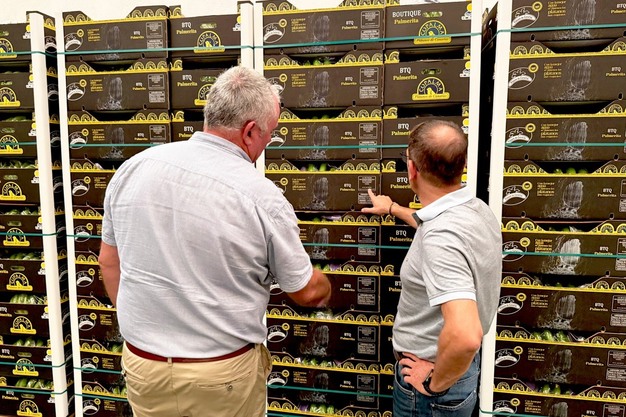 © Hermanos Fernandez
What trends are you observing in European banana consumption?
AC: AC: "Whether it's bananas or other fresh produce, European consumers are increasingly prioritizing quality, provenance, and taste. The PGI Plátano de Canarias banana excels in these areas."
What challenges has Orsero faced because of this export project?
AC: "The banana PGI serves as a regulatory framework that provides consumers with a guarantee, enabling the market to offer a differentiated product. This year, we accredited our resources with the managing body by approving packaging facilities and 85 ripening chambers, the highest number outside of Spain so far."
What is your outlook on the future of banana production in Europe, considering current regulations and global competition?
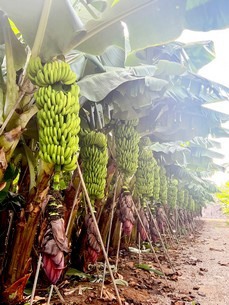 © Hermanos FernandezRM: "The proposals for the new EU multiannual budget (2028–2034), which include agricultural subsidies, pose a serious threat to our sector. The European Commission proposed a 20% cut and the elimination of the CAP as a separate budget item. Fortunately, the European Parliament has since adopted a report opposing this. But we are closely monitoring developments."
AC: "The main challenge for European growers is to clarify how the price of their product is set. Sustainability, workers' rights, and food safety are essential to this. We need to explain to consumers how the supply chain functions and what food is genuinely worth if we want European agriculture and horticulture to thrive."
How does this partnership help boost the social and economic sustainability of Canarian producers?
RM: "The future depends on maintaining stable returns for producers and recognizing the unique value of Canary Island bananas. This is the best way to secure the social and economic future of our region, and that's why we chose to partner with a strategic ally who shares this vision of excellence in European production."
AC: "Our proposal aims to expand the receiving markets by targeting clients who appreciate the unique value of European-produced goods—known for excellence and proximity—ensuring that growers are fairly compensated for their hard work."
What new markets do you want to explore with this alliance?
AC: "We are at a very early stage of the project to think about new markets. Currently, our main focus is to attract and build loyalty among clients who value the unique qualities of Canary Islands bananas in the Italian market. We are cautious with our forecasts because we recognize the product's added value and need to communicate this effectively. However, it is clear that we want to replicate this model in other countries where we operate."
RM: "We want to see how the project develops in Italy first, but it's clear that we plan to gain a significant share in Portugal and France. These countries might welcome bananas from the Canary Islands because they value European banana production within their own RUP. However, our preference is to move forward gradually and consolidate our gains."
How would you describe the spirit of this alliance in one sentence?
"A partnership rooted in trust, quality, and commitment."
In 2024, Europe consumed around 5,950,000 tons of bananas. Of these, approximately 650,000 tons were European bananas, with Canary Island bananas accounting for about 425,000 tons.